
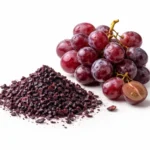
Grape Skin
A polyphenol-rich byproduct used for antioxidant and cosmetic applications.
Grape Skin is the dried residue left after pressing Vitis vinifera grapes in winemaking and juice production. As a winemaking byproduct it concentrates polyphenols — including anthocyanins, flavonoids and tannins — and is noted for antioxidant activity and applications in topical and dietary formulations aimed at improving skin appearance and supporting circulation.
Commonly used in creams, gels and capsules, grape skin extracts are employed for their draining and anticellulitic properties as well as potential effects on lipid metabolism and inflammation described in research. Uses and effects may vary by individual; safety appears good for most people, but pregnant or lactating individuals and those receiving medical treatment should seek professional advice before use.
At a Glance
Grape skin is the dried solid residue remaining after pressing Vitis vinifera grapes for wine and juice production. It typically contains skins, seeds and stems and concentrates polyphenols such as anthocyanins, flavonoids and tannins.
Extracts are used in topical preparations and supplements for antioxidant and draining/anticellulitic purposes; individual responses and product compositions can vary.
| Common name |
|
|---|---|
| Scientific name | Vitis vinifera |
| Classification | Vitaceae |
| Origin |
|
| Parts used |
|
| Active compounds |
|
| Main benefits |
|
| Available forms |
|
Origin & History
Grape skin comes from Vitis vinifera, a vine native to regions of Europe, western Asia and North Africa and now cultivated across temperate wine‑producing areas worldwide. The term refers to the dried solid residue left after pressing grapes for wine and juice; in large‑scale winemaking the pomace can represent around one fifth of the grape mass produced in a vintage.
For centuries this pressed residue has been recycled and reused in local economies rather than discarded. In many wine‑producing regions of Europe, pomace was traditionally distilled into pomace brandy (orujo) and widely repurposed as animal feed and natural fertilizer. Other historical uses include incorporation as a food industry additive and as a flavoring or macerant for regional cheeses; more recently the concentrated polyphenols in grape skin have attracted interest in cosmetics and herbal formulations.
Composition & Active Compounds
Grape skin pomace is a dry, crumbly residue made up of grape skins, seeds and stems; color varies from yellow to mauve depending on grape variety. Chemically it concentrates polyphenols and fiber — notably anthocyanins, flavonoids (including catechins and flavonols), tannins, phenolic acids and stilbenes such as trans-resveratrol — compounds that are the primary phytochemicals targeted in topical and supplement formulations. The skins and seeds are the parts most used in supplements because they concentrate key polyphenols such as anthocyanins and trans-resveratrol.
- Anthocyanins: pigmented polyphenols present mainly in skins
- Flavonoids: broad class of polyphenols including catechins and flavonols
- Catechins: flavonoid subgroup found in skins and seeds
- Flavonols: flavonoid subgroup (e.g., quercetin-type compounds)
- Tannins: astringent phenolic polymers in skins and seeds
- Phenolic acids: hydroxycinnamic and gallic acids
- Stilbenes: includes trans-resveratrol
- Fibers: residual structural carbohydrates in pomace

Properties & Effects
Grape skin is traditionally known for concentrating plant polyphenols and is commonly used in topical and supplemental preparations aimed at skin appearance and circulation support.
Antioxidant activity is the most well-documented property of grape skin extracts.
- Antioxidant: research suggests it may support antioxidant defenses and help limit oxidative damage.
- Anti-aging: may contribute to reducing signs of premature aging associated with oxidative processes.
- Draining and anticellulitic: traditionally used to support fluid drainage and reduce the appearance of cellulite.
- Lipid-lowering: research suggests it may help improve blood lipid profiles.
- Circulation support: may support healthy circulation and help relieve sensations of heavy legs.
- Anti-inflammatory: studies suggest it may have anti-inflammatory effects in some contexts.
- Antibacterial and antifungal: preliminary research indicates possible antimicrobial activity.
Dosage & How to Use
Available dosing information for grape skin extracts varies between products and is not standardized.
Specific dosage recommendations are not provided in the available facts; consult the dose indicated on each product label and seek advice from a healthcare professional before use, particularly for pregnant or lactating individuals and people receiving medical treatment.
Safety, Side Effects & Contraindications
Grape skin products are generally well tolerated, but certain groups should exercise caution and consult a healthcare professional before use. Pregnant and lactating people and anyone currently receiving medical treatment are advised to seek medical advice to evaluate safety in their specific situation.
No major adverse effects have been widely reported for grape skin preparations, though individual sensitivity or allergic reactions are possible and interactions with medications cannot be ruled out; discontinue use and seek medical attention if unexpected symptoms occur. Use caution with product-specific formulations and follow label guidance or professional recommendations.
- Pregnant women: seek medical advice before use.
- Lactating women: seek medical advice before use.
- People receiving medical treatment: consult a healthcare professional to check for possible interactions or contraindications.
Consult a healthcare professional before using grape skin products, especially if pregnant, breastfeeding or taking medications, as formulations vary and interactions are possible.