
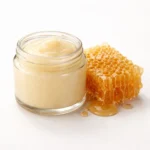
Royal Jelly
A nutrient-dense bee secretion used as a revitalizing tonic.
Royal Jelly is a nutrient-rich secretion produced by worker bees to feed queen bees and developing larvae. High in the fatty acid 10-HDA and B-group vitamins such as vitamin B5, it is available fresh or lyophilized and has long been used as a tonic and antifatigue supplement; scientific research has investigated its possible effects on energy, cognitive performance and immune activity, though responses and findings vary among individuals.
Sold as raw product, freeze-dried powder or in capsules, typical supplement doses range from about 200 mg to 1 g per day and potency depends on 10-HDA content. Royal jelly is generally well tolerated but is contraindicated for people with allergies to bee products; pregnant or breastfeeding individuals should consult a healthcare professional before use. Reported adverse reactions are mainly allergic (rash, itching, respiratory symptoms) and warrant discontinuation and medical advice if they occur.
At a Glance
Royal jelly is a nutrient-rich secretion produced by worker bees to feed queen bees and early larvae. It is characterized by a high content of the fatty acid 10-HDA and B-group vitamins such as vitamin B5. Available fresh or freeze-dried, it is used as a tonic and has been researched for effects on energy, immunity and aging; individual responses vary.
| Common name | Royal jelly |
|---|---|
| Origin |
|
| Parts used | Hypopharyngeal and mandibular gland secretion |
| Active compounds |
|
| Main benefits |
|
| Available forms |
|
Origin & History
Royal jelly is produced within honeybee colonies by the hypopharyngeal and mandibular glands of worker bees and is fed to developing larvae and the queen. Although modern production occurs wherever managed honeybees are kept, traditional sources and early apiculture are often linked to Europe and Asia; royal jelly is therefore a product of the hive rather than a plant and its natural habitat is the bee colony.
In ancient China it was reserved for nobles and rulers who attributed to it sexual vigor and longevity. The substance was also valued in Egypt and Greece and prized for its rarity and perceived restorative qualities; its scarcity historically made it costly and exclusive. Improvements in beekeeping have enabled larger-scale harvesting and broader availability today, but uses, potency and individual responses vary.
Composition & Active Compounds
Royal jelly is a beige, pearly, viscous secretion with a distinct spicy note; it is supplied fresh or as freeze-dried powder and is composed mainly of 60% to 70% water, 10% to 13% proteins, 11% to 14% sugars and about 5% lipids. Its chemical profile includes fatty acids, B-group vitamins, proteins and several minor bioactive molecules; key compounds such as the fatty acid 10-HDA and vitamin B5 are central to product quality and are commonly used to assess potency.
The fatty acid 10-HDA is widely regarded as the primary active compound in royal jelly and is often used as a marker of quality.
- 10-HDA: major fatty acid characteristic of royal jelly
- Vitamin B5: pantothenic acid involved in cellular metabolism and supporting skin, hair and nails
- Acetylcholine: a neurotransmitter present in the secretion
- Royalisin: a bee-derived protein present in royal jelly
- Neopterin: molecule associated with immune-system activity
- Gamma-globulin: class of immune proteins found in the secretion
Properties & Effects
Royal jelly is traditionally regarded as a nourishing hive product used as a general restorative and tonic. It has been applied in folk and modern contexts to support energy, resilience and certain aspects of wellbeing.
Royal jelly is most widely known as a tonic with energizing and antifatigue effects.
- Tonifying / Antifatigue: Research suggests it may support physical and mental energy and help during periods of fatigue or convalescence.
- Cognitive support: Studies suggest it may support attention and concentration in some people.
- Immunostimulant: Research indicates it may help modulate immune responses and support seasonal immune resilience.
- Antibacterial: Laboratory findings suggest it may inhibit growth of certain bacterial strains.
- Antioxidant and anti-aging: Research suggests it may have antioxidant activity that could help protect cells from oxidative stress associated with aging.
- Support for recovery and sexual vitality: Some studies and traditional use suggest it may help restore vigor during convalescence and support sexual vitality in some individuals.
Dosage & How to Use
General dosing for royal jelly supplements varies; common guidance from experts is listed below.
| Typical supplement dose |
|
|---|---|
| When to take | Morning before breakfast |
| Treatment duration | 1 month |
Safety, Side Effects & Contraindications
Royal jelly is generally well tolerated by many people but certain groups should avoid it or seek professional advice first. The facts state it is contraindicated for children and for people with allergies to honey, pollen or bee stings; pregnant and breastfeeding individuals are advised to consult a healthcare professional before use.
Reported adverse reactions are mainly allergic in nature and can include redness, itching, eczema, hives, asthma attacks, nasal discharge and itchy eyes; treatment should be stopped and medical advice sought if allergic symptoms occur. The provided facts do not list specific medication interactions, so caution and professional guidance are recommended when combining royal jelly with other treatments or managing underlying health conditions.
- Allergy to bee products: Contraindicated for people allergic to honey, pollen or bee stings due to risk of allergic reactions.
- Children: Contraindicated for use in children.
- Pregnancy and breastfeeding: Precautionary—seek medical advice before use due to limited data.
Avoid if allergic to bee products or for children; pregnant or breastfeeding individuals should consult a healthcare professional before use. Consult a healthcare professional if taking other medications or managing medical conditions.