
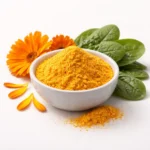
Lutein
A carotenoid that supports macular pigment and visual comfort.
Lutein is a yellow‑orange carotenoid pigment concentrated in the macula of the retina. It cannot be synthesized by the human body and must be obtained from food; lutein contributes to macular pigment, filters high‑energy blue light, and exhibits antioxidant activity that may support retinal cells and visual comfort during prolonged screen use or low‑light tasks.
Dietary sources include dark leafy greens (kale, spinach), broccoli, corn, nuts and eggs, and lutein is also available in capsules or tablets. Epidemiological data indicate a typical effective intake of about 8–12 mg daily for ocular benefit, though individual responses vary; smokers are advised not to take lutein supplements because of potential proinflammatory interactions with tobacco smoke. No widespread contraindications or adverse effects have been reported, and lutein supplements should not replace professional medical care for eye disease.
At a Glance
A dietary carotenoid, lutein provides the distinctive yellow pigment of the macula and occurs naturally in many plant foods and some animal products.
It cannot be synthesized by humans and must be obtained from dietary sources such as dark leafy greens and eggs. Lutein functions as a blue-light filter and antioxidant associated with macular pigment and visual comfort, with effects that vary between individuals.
| Common name | Lutein |
|---|---|
| Classification | Carotenoids |
| Origin | Plant and animal |
| Parts used |
|
| Active compounds |
|
| Main benefits |
|
| Available forms |
|
Origin & History
Lutein is a carotenoid present in many plants and some animal products, notably concentrated in dark leafy greens such as kale and spinach, and found in broccoli, corn, nuts and eggs. It contributes the yellow pigment of the macula; as a plant-derived carotenoid it does not function as provitamin A and is sensitive to heat, so food preparation affects its final content.
Carotenoids were first isolated in 1831 and lutein’s presence in the retina was documented in 1945, though its physiological role became clearer toward the end of the twentieth century. Research interest increased in the late 1990s, and by the 2000s lutein began to appear in dietary supplements marketed for ocular support and visual comfort.
Composition & Active Compounds
Lutein appears as a yellow‑orange, lipophilic carotenoid concentrated in the macula; it is thermolabile, so food processing and prolonged cooking reduce its content. The main chemical constituents in macular pigment are lutein together with the related carotenoids zeaxanthin and meso‑zeaxanthin, which are recognized for their roles in blue‑light absorption and antioxidant activity in ocular tissue.
Lutein is the primary compound used in supplements and is most commonly sourced from dark leafy greens and egg yolks.
- Lutein: yellow‑orange carotenoid concentrated in the macula
- Zeaxanthin: carotenoid that contributes to macular pigment alongside lutein
- Meso‑zeaxanthin: isomer present in the macula and found in some supplement formulations
Related Herbs
Properties & Effects
Lutein is traditionally known for its association with eye health, especially support for the central retina and visual comfort during prolonged screen use or low‑light tasks. Its most well‑documented property is support for macular health and visual comfort.
- Vision support: may support macular function and overall visual comfort.
- Antioxidant: may support protection of retinal cells against oxidative damage.
- Blue‑light filtration: may support filtering of high‑energy blue light and reduce visual discomfort from screens.
- Support in ocular conditions: research suggests a possible role in slowing development or supporting prevention of age‑related macular degeneration and cataracts.
Dosage & How to Use
Typical supplemental recommendations for lutein are shown below.
| Recommended daily intake | 8–12 mg per day |
|---|
Safety, Side Effects & Contraindications
Some people should avoid lutein supplements; most notably, smokers are advised not to take supplemental lutein because it may become proinflammatory in contact with tobacco smoke. There are no widely reported contraindications to lutein use and no consistent adverse events have been linked to lutein supplements to date.
Lutein is generally well tolerated and known side effects are not commonly reported, but individual responses can vary. Discuss lutein use with a healthcare professional before starting supplements, particularly when taking other medications or managing medical conditions; lutein should not replace conventional medical care for eye disease.
- Smokers: Supplements are not recommended because lutein may become proinflammatory in contact with tobacco smoke.
Avoid lutein supplements if you smoke; consult a healthcare professional before use, especially if taking medications or managing medical conditions.