
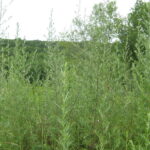
Mugwort
Traditionally used to help reduce migraine frequency.
Mugwort (Tanacetum parthenium), a perennial in the Asteraceae family native to the Middle East, southeastern Europe and Asia Minor, has a long history of traditional use for gynecological complaints and digestive issues. The plant’s dried flowers and fresh leaves are the usual preparations; the sesquiterpene lactone parthenolide is a principal active constituent and the species is most commonly used today to reduce the frequency and severity of migraine attacks.
Clinical trials and phytotherapeutic reviews suggest mugwort may help prevent migraine episodes and can relieve painful menstruation for some individuals, though responses vary. Typical guidance targets parthenolide levels of about 0.2–1 mg per day taken with food and often in cyclic courses; contraindications include pregnancy, lactation and allergy to Asteraceae, and rare adverse effects such as contact dermatitis, oral ulcers or gastrointestinal upset have been reported. Effects and tolerability differ by individual; seek professional advice before starting prolonged use.
At a Glance
Mugwort is a perennial herb of the Asteraceae family traditionally used across Eurasia; the plant’s dried flowers and fresh leaves are the parts most commonly prepared. It is principally recognized for the sesquiterpene lactone parthenolide and is most often used today to reduce migraine frequency and to ease painful menstruation, although effects vary between individuals.
| Common name |
|
|---|---|
| Scientific name |
|
| Plant family | Asteraceae |
| Origin |
|
| Parts used |
|
| Active compounds |
|
| Main benefits |
|
| Available forms |
|
Origin & History
Mugwort originates in the Middle East and expanded across southeastern Europe and Asia Minor; the species is now naturalized in regions such as North America and Australia. It typically grows in sunny, well-drained alkaline or clay-rich soils and is often found on roadsides, at the foot of old walls and in other disturbed or inhospitable sites.
The Romans used mugwort to induce menstruation and to assist in expelling the placenta during childbirth. Across later centuries the plant was employed in a variety of folk practices: as a gynecological remedy, for digestive complaints, in poultices for sprains and bruises, and in some locales the fresh leaves were eaten as a folk anti-migraine and fever remedy. Historical uses are diverse and culturally specific; contemporary interest focuses largely on its role in preventing migraine attacks and easing painful menstruation for some individuals, with effects that can vary between people.
Composition & Active Compounds
Mugwort is a perennial herb 70–80 cm tall with a rigid, branched stem, yellow‑green pinnate leaves 2–8 cm long and small white flower heads produced in summer; the crushed leaves emit a characteristic camphor‑like scent. Its main chemical groups include sesquiterpene lactones (notably parthenolide), flavonoids and an essential oil rich in camphor and chrysanthemyl acetate, which together account for many of the plant’s traditional uses and are the basis for most preparations. Parthenolide is the principal active compound and is commonly targeted in standardized supplement preparations.
- Parthenolide: sesquiterpene lactone considered the principal active constituent
- Flavonoids: polyphenolic compounds present in aerial parts
- Essential oil (camphor, chrysanthemyl acetate): volatile fraction with a camphoraceous aroma
Properties & Effects
Mugwort is traditionally known for use in reducing migraine frequency and easing painful menstruation, with additional folk uses for digestive complaints and external poultices. Clinical trials suggest mugwort may help reduce the frequency of migraine attacks for some people.
- Migraine prevention: May support reduced frequency and intensity of migraine attacks in some individuals.
- Menstrual pain relief: May help relieve painful menstruation for some users.
- Anti-inflammatory: May support reduction of symptoms associated with inflammation.
Dosage & How to Use
Typical dosing guidance from clinical trials focuses on parthenolide levels and cyclic courses of administration.
| Migraine prevention |
|
|---|
Safety, Side Effects & Contraindications
Mugwort should be avoided by people who are pregnant or breastfeeding and by anyone with known hypersensitivity to plants in the Asteraceae family. Individuals with existing health conditions or those taking other medications are advised to consult a healthcare professional before use, as individual tolerability can vary.
Reported adverse effects include oral ulcers, contact dermatitis and altered taste (dysgeusia), with rare gastrointestinal disturbances also described. If signs of an allergic reaction or other serious adverse effects occur, discontinue use and seek medical advice; tolerability differs between individuals and professional guidance is recommended for prolonged use.
- Pregnancy: contraindicated
- Lactation: contraindicated
- Allergy to Asteraceae: avoid if allergic to members of the daisy family (e.g., chamomile, dandelion, etc.)
Not recommended during pregnancy or breastfeeding and avoid if allergic to Asteraceae; consult a healthcare professional before use, especially for prolonged use or if taking other medications.