
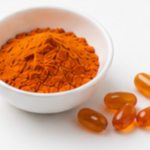
Coenzyme Q10
An essential enzymatic cofactor synthesized by the body and supplied by food, with antioxidant properties and a role in cellular energy production.
Coenzyme Q10 (also called ubiquinone or ubiquinol) is a fat‑soluble cofactor involved in mitochondrial electron transport that helps cells produce ATP. Present in most tissues, it exists in oxidized (ubiquinone) and reduced (ubiquinol) forms and functions as an antioxidant; the body synthesizes CoQ10 and additional amounts are obtained from certain foods. Levels can decline with age and in some health conditions, and the compound is available as oral capsules or tablets.
CoQ10 has been studied for a range of applications, including cardiovascular support (hypertension and heart failure), reduction of statin‑related muscle effects, and migraine prevention, but individual responses vary and benefits are not guaranteed. Typical supplemental doses reported in research span low to moderate ranges, and safety is generally acceptable; precautions include monitoring blood glucose and avoiding use in pregnancy, lactation, or in children unless supervised by a clinician. Consult a healthcare professional about interactions and appropriate dosing for specific circumstances.
At a Glance
A naturally occurring benzoquinone, Coenzyme Q10 is found throughout the body and participates in mitochondrial electron transport to support cellular ATP production. It is synthesized endogenously, supplied in the diet, and exists in oxidized and reduced forms that contribute to antioxidant activity.
| Common name |
|
|---|---|
| Scientific name | 2,3-dimetoxi-5-metil-6-decaprenilbenzoquinona |
| Origin | Chemical synthesis |
| Active compounds |
|
| Main benefits |
|
| Available forms |
|
Origin & History
Coenzyme Q10 is a lipid-soluble benzoquinone present in nearly all cells where it participates in mitochondrial electron transport and contributes to cellular energy production and antioxidant defense. It is obtained from dietary sources such as nuts, green vegetables, certain fish, and organ meats, and is also produced endogenously via the mevalonate pathway; tissue levels change with age and certain health conditions.
Biochemical research initially isolated ubiquinone from animal tissues and established its role in cellular respiration, which led to broader investigation of potential clinical and nutritional uses and to the development of scalable synthetic production. In some countries CoQ10 is used as a prescription medicine for heart failure.
Composition & Active Compounds
Coenzyme Q10 is a yellow, lipid‑soluble benzoquinone that consists of a benzoquinone ring attached to an isoprenoid side chain (chemical name 2,3-dimetoxi-5-metil-6-decaprenilbenzoquinona). It exists in three interconvertible chemical states that influence its role in mitochondrial electron transport and antioxidant activity. Ubiquinol is the fully reduced, most active form commonly emphasized in supplements for its antioxidant and cellular energy roles.
- Ubiquinone: oxidized form involved in electron transport
- Ubisemiquinone: partially reduced intermediate that participates in redox cycling
- Ubiquinol: fully reduced form, active antioxidant form



Properties & Effects
Coenzyme Q10 is traditionally known for supporting cellular energy production and serving as an antioxidant that helps protect tissues from oxidative damage.
Research suggests Coenzyme Q10 may reduce blood pressure in some people.
- Antioxidant: may support reduction of oxidative stress and help protect cells.
- Blood pressure reduction: may support lower blood pressure when used alone or alongside antihypertensive treatment.
- Cardiovascular support: may support heart function and improve certain measures of cardiac performance in some cases.
- Statin-related muscle support: may help reduce muscle symptoms associated with statin therapy for some individuals.
- Migraine prevention: research suggests it may reduce the frequency of migraine attacks in some people.
- Neuroprotective support: may support functional outcomes in early-stage Parkinson’s disease in some studies.
Dosage & How to Use
Typical supplemental dosages reported in research vary depending on the intended use.
| Cardiovascular health |
|
|---|---|
| Antioxidant protection |
|
| Migraine prevention |
|
Safety, Side Effects & Contraindications
No absolute contraindications are reported and Coenzyme Q10 is generally considered well tolerated, but individual responses vary and clinical supervision is advised for specific populations. As a precaution, use is not recommended for children or for pregnant and breastfeeding people unless a clinician advises otherwise.
Side effects are uncommon according to the provided facts and the supplement has an acceptable safety profile in trials, though individual reactions can differ. Statin therapy reduces endogenous CoQ10 production and supplementation is often discussed in that context; some clinical studies have also evaluated CoQ10 given alongside certain chemotherapies with reported protective effects without reducing anticancer efficacy. Discuss potential interactions and appropriate monitoring with a healthcare professional before starting supplementation.
- Children: not recommended for use in children as a precaution
- Pregnancy and lactation: avoid use unless supervised by a clinician
- Blood sugar: may lower blood glucose; monitor levels regularly if diabetic or taking glucose-lowering medication
May lower blood sugar and is not recommended for children, pregnant or breastfeeding people without medical advice; consult a healthcare professional before use.