
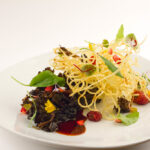
Maitake
An adaptogenic mushroom used to support immune resilience and metabolic balance.
Maitake (Grifola frondosa) is a large, clustered polypore mushroom native to East Asia, identifiable by its gray-brown, fan-shaped caps arranged in rosettes. Traditionally used in Japanese and Chinese medicine as an adaptogen, Maitake contains soluble polysaccharides—particularly beta-glucans and a highly active MD fraction—that have been the focus of research into immunomodulatory activity.
Research has examined Maitake for immune support and metabolic effects, with studies reporting effects on immune cell activity and investigations into blood glucose, blood pressure and lipid markers; clinical protocols have used whole-powder intakes of roughly 500–2500 mg/day and D-fraction doses of about 0.5–1 mg/kg/day. The mushroom is available fresh, dried or as concentrated extracts. Uses and effects vary by individual, and potential interactions or contraindications have been reported, so consultation with a qualified health professional is advised before use.
At a Glance
A clustered polypore fungus native to Japan, Maitake forms gray-brown rosettes of fan-shaped caps and commonly grows on decaying hardwood stumps. It contains beta-glucan polysaccharides—notably a concentrated D/MD fraction—that have been studied for immune and metabolic activity.
| Common name |
|
|---|---|
| Scientific name | Grifola frondosa |
| Plant family | Meripilaceae |
| Origin | Japan |
| Parts used | Whole mushroom |
| Active compounds |
|
| Main benefits |
|
| Available forms |
|
Origin & History
Maitake is a clustered polypore fungus native to East Asia, especially Japan, that typically fruits at the base of decaying hardwoods such as oak, elm, beech and chestnut. It also occurs in the wild in parts of eastern North America and temperate Europe; the fungus forms large rosettes of fan-shaped caps and is usually collected during the warm, humid months when fruiting bodies are mature.
Historically, Maitake has been valued both as a culinary delicacy and as a traditional remedy in Japanese and Chinese folk practice, where whole mushrooms were prized and sometimes kept secret by harvesters. In Japan the mushroom’s rarity and desirability led to guarded harvest sites and, in some accounts, trade of the fungus by weight in silver. Over time cultivation spread to meet culinary and commercial demand, and the mushroom remains prominent in regional foodways and traditional herb use.
Composition & Active Compounds
The Maitake mushroom is a gray-brown, clustered polypore with fan- or spatula-shaped caps arranged in rosettes on a short, branched stem; individual fruiting bodies can reach about fifty centimeters across and weigh several kilograms. Its chemical profile is dominated by soluble polysaccharides—chiefly beta-glucans—and researcher-identified fractions derived from those polysaccharides (the D-fraction and the more purified MD fraction); the mushroom is also a source of vitamins, minerals and trace elements, which contribute to its use in culinary and supplement forms. The beta-glucan polysaccharide, particularly the D/MD fraction isolated from Grifola frondosa, is the primary active component targeted in most Maitake supplements.
- Beta-glucans: polysaccharide class responsible for immunomodulatory activity
- D-fraction (MD fraction): concentrated beta-glucan fractions with enhanced oral bioactivity
Properties & Effects
Traditionally used in Japanese and Chinese practice as both a culinary mushroom and an adaptogen, Maitake is prized for supporting resilience and recovery during seasonal and physiological stress.
Most research and traditional use focus on Maitake’s role in regulating and supporting the immune system.
- Immune support: Research suggests it may help modulate immune function and support recovery during periods of immune stress.
- Blood glucose regulation: Studies indicate it may support healthy blood sugar levels and glucose metabolism.
- Cardiometabolic support: Research suggests it may help support healthy blood pressure, cholesterol and lipid profiles and may assist with weight management in some cases.
- Support during cancer care: Preliminary studies suggest it may help improve tolerance to some cancer therapies and support recovery, though evidence remains inconclusive.
- Adaptogenic support: Traditionally used to help counter fatigue and support resilience to physical and seasonal stressors.
Dosage & How to Use
Dosage recommendations reported in studies vary by extract type and are typically given as daily amounts and short treatment courses.
| Effective dose |
|
|---|
Safety, Side Effects & Contraindications
Individuals taking glucose‑lowering medications should use caution and consult a healthcare professional before using Maitake, because the fungus has been studied for blood‑glucose effects and may influence glycemic control; likewise, people treated for high blood pressure or high cholesterol should seek medical advice given reported effects on these metabolic markers. Those receiving immunosuppressive therapy or with autoimmune conditions should consult a clinician prior to use, since Maitake has documented activity on immune cells; cancer patients should also discuss Maitake with their oncology team because research has explored combined use with chemotherapy and reported effects on treatment tolerance and recovery.
The provided facts do not list detailed, consistent side‑effect profiles; adverse reactions are not extensively documented in the source material, and individual responses can vary. Because interactions and contraindications have been reported in the literature referenced by the facts, consultation with a qualified health professional is recommended before starting Maitake supplements, and monitoring is advised if used alongside prescription medications.
May affect blood sugar and immune function; consult a healthcare professional before use, especially if taking glucose‑lowering drugs, immunosuppressants, or undergoing cancer treatment.