Best Herbs and Natural Supplements for Energy Without Caffeine
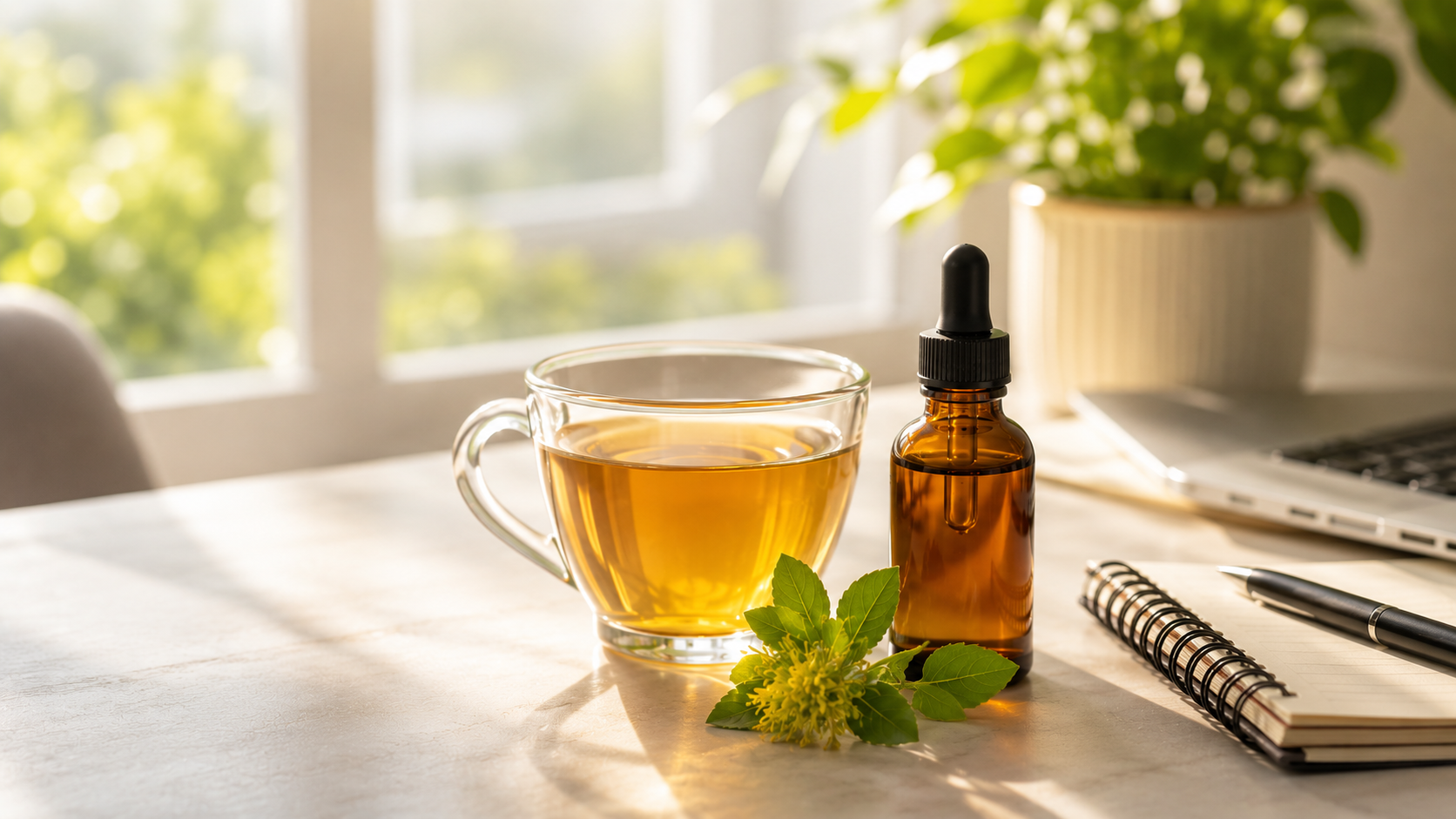
Caffeine is the world’s most widely used stimulant — but it comes with drawbacks: energy crashes, disrupted sleep, dependency and tolerance that builds over time. A growing number of people are looking for sustainable alternatives that support energy without the peaks and troughs of stimulant-based solutions.
This guide covers seven herbs and supplements that support energy, focus and vitality through different mechanisms — none of them relying on caffeine stimulation.
This article is for informational purposes only. Persistent fatigue can have many underlying causes. Consult a healthcare professional if fatigue is severe or unexplained.
Why Look Beyond Caffeine?
Caffeine works by blocking adenosine receptors — the chemical that signals tiredness. It does not actually produce energy; it masks fatigue. The herbs and supplements in this guide work differently: they support the body’s own energy production, reduce the physiological effects of stress-related fatigue, or address nutrient gaps that cause low energy.
The goal is energy that is sustainable throughout the day, without a crash or dependency.
| Adaptogens | Reduce fatigue caused by chronic stress. Build resilience over weeks. Best for burnout, mental exhaustion and stress-related energy dips. |
|---|---|
| Energizing tonics | Stimulate vitality and physical performance through different pathways. Examples: Maca, Ginseng. |
| Cellular nutrients | Address deficiencies that impair energy production at the cellular level. Examples: Coenzyme Q10, Vitamin B12. |
7 Natural Energy Boosters
Adaptogens & Energizing Herbs
Support energy by reducing stress load and building long-term resilience.
1. Rhodiola Rosea
The top adaptogen for mental energy and fatigue — particularly effective when exhaustion is linked to cognitive overload or burnout.
- How it works→Rosavins and salidroside are thought to influence dopamine and serotonin pathways while modulating the stress hormone cortisol.
- Best for→Mental fatigue, burnout, reduced motivation, cognitive performance under stress.
- Typical form→Standardised extract (3% rosavins / 1% salidroside); capsules taken in the morning.
- Caution→Mild stimulating effect — avoid taking late in the day. Avoid during pregnancy.
2. Ginseng
One of the oldest and most studied energizing tonics in the world — used in traditional Chinese medicine for centuries to restore vitality.
- How it works→Ginsenosides modulate the HPA axis, support adrenal function and have been studied for effects on physical performance and cognitive function.
- Best for→Physical and mental fatigue, recovery, general vitality, supporting immune function alongside energy.
- Typical form→Standardised root extract; capsules, tincture. Often used in cycles (e.g. 3 months on, 1 month off).
- Caution→May interact with blood thinners and diabetes medication. Avoid during pregnancy. Can cause insomnia if taken late.
3. Eleutherococcus
Known as Siberian ginseng — a gentler adaptogen with a particular affinity for physical endurance and resistance to stress-related fatigue.
- How it works→Eleutherosides support adrenal function and are thought to enhance oxygen utilisation and physical endurance.
- Best for→Physical fatigue and endurance, convalescence, stress-related exhaustion, immune support alongside energy.
- Typical form→Root extract capsules or tincture; used in courses of several weeks.
- Caution→Avoid during pregnancy and high blood pressure. May interact with digoxin and diabetes medication.
4. Ashwagandha
When fatigue is driven by chronic stress and high cortisol — Ashwagandha addresses the root cause rather than the symptom.
- How it works→Withanolides help regulate cortisol and support the HPA axis — chronic high cortisol is a major driver of persistent fatigue.
- Best for→Stress-related fatigue, low energy linked to burnout, difficulty concentrating.
- Typical form→Standardised root extract (KSM-66 or Sensoril); capsules or powder in smoothies.
- Caution→Avoid during pregnancy and with hyperthyroidism. Not suitable for Solanaceae allergy.
5. Maca
A Peruvian root traditionally consumed for energy, stamina and hormonal balance — a tonic rather than a stimulant.
- How it works→Rich in amino acids, minerals and unique glucosinolates; may support hormonal balance and physical endurance, though mechanisms are not fully established.
- Best for→Physical stamina, energy linked to hormonal imbalance, libido alongside vitality.
- Typical form→Powder (added to smoothies or food), capsules. Gelatinised form is easier to digest.
- Caution→Avoid with thyroid conditions (goitrogen content). Limited data on long-term safety.
Cellular Energy Nutrients
Address deficiencies that impair energy production at the cellular level.
6. Coenzyme Q10
An essential compound in cellular energy production — and one that declines naturally with age and with statin medication use.
- How it works→CoQ10 is a key component of the mitochondrial electron transport chain — the process that produces ATP (the body’s energy currency).
- Best for→Age-related fatigue, fatigue linked to statin medication, cardiovascular health alongside energy.
- Typical form→Ubiquinol (the active form) is better absorbed than ubiquinone, especially in people over 40; softgel capsules.
- Caution→May interact with anticoagulant medication. Consult a doctor if taking statins.
7. Vitamin B12
A deficiency in B12 is one of the most common and overlooked causes of fatigue — especially in people who eat little or no meat.
- How it works→B12 is essential for red blood cell formation and neurological function. Deficiency leads to fatigue, weakness and brain fog.
- Best for→Fatigue in vegetarians, vegans and older adults; fatigue alongside brain fog or low mood.
- Typical form→Methylcobalamin (sublingual or capsule) is the most bioavailable form. Cyanocobalamin is widely used but less efficiently converted.
- Caution→Generally very safe. If deficiency is suspected, confirm with a blood test before self-supplementing.
Quick Comparison
| Supplement | Best for | Onset |
|---|---|---|
| Adaptogens & Energizing Herbs | ||
| Rhodiola Rosea | Mental fatigue, burnout, cognitive performance | Days–weeks |
| Ginseng | Physical and mental fatigue, general vitality | Weeks |
| Eleutherococcus | Physical endurance, stress-related exhaustion | Weeks |
| Ashwagandha | Stress-driven fatigue, cortisol-related exhaustion | Weeks |
| Maca | Physical stamina, hormonal fatigue | Weeks |
| Cellular Nutrients | ||
| Coenzyme Q10 | Age-related fatigue, statin users | Weeks |
| Vitamin B12 | Deficiency-related fatigue, vegans, older adults | Weeks |
Which One Is Right for You?
- Mental fatigue and burnout→Rhodiola — the most studied adaptogen for cognitive fatigue and performance under stress.
- Stress is the root cause→Ashwagandha — targets cortisol dysregulation that leads to chronic exhaustion.
- Physical endurance and stamina→Ginseng or Eleutherococcus — both have traditional and research support for physical performance.
- Hormonal or reproductive fatigue→Maca — particularly cited for energy alongside hormonal balance and libido.
- Over 40 or taking statins→Coenzyme Q10 — levels naturally decline with age and are further depleted by statin medication.
- Vegetarian, vegan or older adult→Vitamin B12 — confirm deficiency with a blood test first.
If fatigue is your main complaint, rule out deficiencies first (B12, iron, Vitamin D) before adding adaptogens. Adaptogens work best when the foundation is already in place.
A Note on Safety
Most of the herbs and supplements on this list are well tolerated when used as directed, but several interact with medications — particularly blood thinners, diabetes drugs and antidepressants. Adaptogens are generally intended for short courses rather than indefinite daily use. Ginseng and Rhodiola should be taken in the morning to avoid sleep disruption.
Persistent or unexplained fatigue should be investigated by a healthcare professional before self-supplementing. Many underlying conditions — thyroid disorders, anaemia, sleep apnoea — can cause fatigue and require specific treatment. See our Medical Disclaimer.