
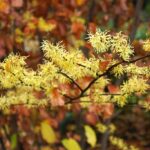
Witch Hazel
A tannin-rich astringent traditionally used to support venous circulation.
Witch Hazel (Hamamelis virginiana) is a tannin‑rich shrub native to North America whose leaves and bark have been used traditionally as an astringent and venous tonic. Containing tannins and flavonoids, preparations are associated with astringent, hemostatic and mild vasoconstrictive properties that have been applied to support microcirculation and address symptoms related to venous insufficiency.
Topical and oral forms are used for a range of skin and mucosal applications, including mild inflammatory skin irritations, insect bites, sunburn, and as adjunctive care for hemorrhoidal and varicose symptoms; it has also been employed as a mouth rinse for minor oral inflammation. Witch hazel is available as teas, hydrosols, tinctures, dry extracts and topical gels or creams. Individual responses vary, and adverse effects are uncommon but can include digestive discomfort such as heartburn; seek professional advice for persistent issues or before combining with other therapies.
At a Glance
A deciduous shrub native to eastern North America, Witch Hazel produces tannin‑rich leaves and bark that are used in both topical and oral herbal preparations. Preparations from the plant are commonly applied for their astringent and venous‑tonic properties and for a range of mild skin and mucosal uses. Extracts, hydrosols and dried material are formulated into teas, tinctures, capsules and topical products.
| Common name |
|
|---|---|
| Scientific name | Hamamelis virginiana |
| Plant family | Hamamelidaceae |
| Origin |
|
| Parts used |
|
| Active compounds |
|
| Main benefits |
|
| Available forms |
|
Origin & History
Witch Hazel (Hamamelis virginiana) is native to eastern North America, occurring from Atlantic coastal provinces and states through parts of the northeastern and southeastern United States and into southern Canada. It grows wild in moist woodlands, preferring well‑drained soils and sites from partial shade to full sun, and is now also cultivated in parts of Europe.
Native American communities traditionally used decoctions of the leaves and bark to treat hemorrhoids, mild skin inflammation and bleeding. Preparations of the plant have also been applied as mouth rinses for oral inflammation and, in some traditions, externally for eye irritations; over time the shrub was introduced to Europe and became a cultivated ornamental as well as a source of topical and internal remedies.
Composition & Active Compounds
Witch Hazel is a deciduous shrub with alternately arranged, toothed oval leaves and distinctive bright yellow, ribbon‑like flowers that appear after the leaves fall. The leaves and bark are the primary harvested parts and contain high levels of tannins together with flavonoids, organic acids and small amounts of essential oils; these constituents underlie the plant’s astringent and tissue‑contracting properties and are the focus of most extracts and formulations. The tannins in the leaves and bark are the primary active constituents most commonly standardized in supplements and topical extracts.
- Tannins: derivatives of gallic acid and astringent polyphenols found in leaves and bark
- Hamamelitanina: a catecholic tannin predominantly present in the bark
- Flavonoids: quercetin and kaempferol glycosides such as astragalin, quercitrin, myricitrin
- Organic acids: caffeic acid, quinic acid, gallic acid
- Essential oils: volatile compounds present in small amounts
Related Herbs
Properties & Effects
Witch Hazel is traditionally known for topical and internal uses to tighten tissues and support venous circulation while helping to soothe minor skin complaints. Witch hazel is most noted for its astringent and venous‑tonic effects that support microcirculation.
- Venous tonic: may support microcirculation and be used for symptoms linked to venous insufficiency.
- Astringent: may help tighten tissues and reduce minor oozing from irritated skin.
- Hemostatic: may support reduction of minor superficial bleeding.
- Soothing: may help calm mild skin inflammation such as sunburn, insect bites or eczema.
- Oral mucosal support: may be used as a mouth rinse for mild gingival or oral inflammation.
- Cosmetic support: may help reduce puffiness and the appearance of enlarged pores in topical applications.
Dosage & How to Use
Typical dosing guidance is provided for managing symptoms linked to venous insufficiency based on extract preparations.
| Symptoms of venous insufficiency |
|
|---|
Safety, Side Effects & Contraindications
People with known hypersensitivity to Witch Hazel or its constituents should avoid using preparations that cause irritation; perform a patch test for topical products and discontinue use if irritation or an adverse reaction occurs. Reported adverse effects are uncommon and are mainly digestive, such as heartburn, and topical use can occasionally cause transient skin irritation.
Interactions with medications or specific medical conditions are not well characterized, so exercise caution when combining Witch Hazel with other therapies and consult a healthcare professional for personalized advice. Seek medical attention for persistent, severe, or worsening symptoms rather than relying solely on herbal treatment.
May cause digestive upset (e.g., heartburn) or topical irritation; avoid if allergic to Witch Hazel and consult a healthcare professional before use or when combining with other treatments.