
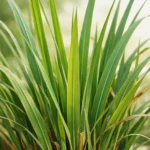
Citronella
A lemon‑scented oil prized for natural mosquito repellent and air freshening.
Citronella (Cymbopogon citratus, C. nardus, C. winterianus) is a fragrant tropical grass whose essential oil—extracted from the leaves and sometimes stems—has a lemon‑fresh aroma. The oil is commonly used in diffusion and diluted topical applications as a natural mosquito repellent and air deodorizer; principal constituents include citronellal, geranial, citronellol and geraniol, which are associated with insect‑repellent, antiseptic and deodorizing properties.
Traditional use and research also report external anti‑inflammatory and analgesic activity and some antimicrobial effects, though responses vary between individuals. Safety precautions are important: dilute the essential oil before skin contact (for example 1–2 drops in a carrier oil or bath), avoid use in children and during pregnancy or breastfeeding, perform a patch test for sensitivity, keep away from eyes and mucous membranes, and store away from heat and light; follow diffuser manufacturer guidance for dosing.
At a Glance
A fragrant grass native to tropical and subtropical regions, citronella yields an essential oil from its leaves and sometimes stems that has a fresh lemon‑like scent. Its oil is widely used in diffusion and as diluted topical preparations for insect repellent, deodorizing and external antiseptic or anti‑inflammatory purposes.
| Common name |
|
|---|---|
| Scientific name |
|
| Plant family | Poaceae (Grasses) |
| Origin | Tropical regions |
| Parts used | Aerial parts |
| Active compounds |
|
| Main benefits |
|
| Available forms |
|
Origin & History
Citronella is a fragrant grass native to tropical and subtropical regions, forming dense clumps of long, lemon‑scented leaves. It is most commonly associated with Southeast Asia—including Indonesia, India, Sri Lanka, China and Vietnam—but related species are also found in parts of Africa and the West Indies; the essential oil is obtained by steam distillation of the leaves and sometimes the stems.
Historically, citronella has been used across cultures for culinary, domestic and aromatic purposes: leaves flavor regional dishes in Southeast Asia, while the oil has been employed in diffusion, perfumery and traditional topical remedies. In many tropical communities the oil is an established household remedy and is widely regarded as the go‑to natural mosquito repellent. Local names, species and uses vary, and these traditional roles have informed modern cultivation and commercial applications.
Composition & Active Compounds
Citronella grows as a fragrant, tufted grass with long, narrow green leaves that emit a fresh lemon aroma; the essential oil is produced by steam distillation of the leaves and sometimes the stems. Its chemistry is dominated by monoterpenoid aldehydes and alcohols—notably citronellal, geranial, citronellol and geraniol—which shape the scent profile and are linked to the plant’s insect‑repellent, aromatic and antiseptic applications.
The leaves are the primary source of the essential oil used in preparations, and citronellal is one of the major constituents responsible for the characteristic lemon scent.
- Citronellal: a monoterpenoid aldehyde that contributes a lemony odor and is a major component of citronella oil.
- Geranial: an aldehyde (often paired with neral as citral) that adds fresh citrus notes and is prominent in the oil.
- Citronellol: a monoterpenoid alcohol that softens aroma and occurs in several Cymbopogon species.
- Geraniol: a floral monoterpenoid alcohol that contributes to scent and is commonly present alongside other alcohols.

Properties & Effects
Citronella is traditionally known as a fragrant tropical grass whose essential oil is widely used in diffusion and diluted topical preparations for insect control and aromatic cleansing.
The most well‑documented use is as a topical or diffused mosquito repellent.
- Insect repellent: Research and traditional use suggest topical application or diffusion of the oil may help repel mosquitoes and other biting insects.
- Anti‑inflammatory: Topical use may support reduction of local inflammation in muscles or joints.
- Analgesic: Applied externally, it may help relieve minor muscle or joint pain and discomfort from insect bites.
- Antiinfectious: Diffusion or external use may exhibit activity against certain microbes and has been studied for such effects.
- Deodorant and air purifier: Diffusion is traditionally used to freshen indoor air and reduce unpleasant odors.
Dosage & How to Use
Follow dilution and device guidance when using citronella essential oil.
| External use |
|
|---|---|
| Diffuser | The dose depends on the diffuser; consult the device manual. |
Safety, Side Effects & Contraindications
Citronella essential oil is not recommended for children, people who are pregnant or breastfeeding, or anyone with a known allergy to any component of the oil. Known side effects can include skin irritation or allergic reactions when the oil is used undiluted, and contact with eyes or mucous membranes should be avoided.
The provided facts do not list specific drug interactions or medical condition interactions. General precautions from the facts include diluting the oil before topical use, performing a tolerance (patch) test on a small skin area prior to wider application, following diffuser manufacturer guidance, keeping the oil out of the reach of children, and storing it away from heat and light; consult a healthcare professional if there is uncertainty about individual suitability.
- Children: oil is not suitable for use on or for children.
- Pregnancy and lactation: avoid use during pregnancy and breastfeeding.
- Allergic individuals: avoid if allergic to any component of the essential oil.
- Avoid contact with eyes and mucous membranes: do not apply the oil to sensitive tissues.
- Dilute before topical use: the essential oil should be diluted in a carrier before skin application.
- Patch test recommended: test a small skin area for tolerance before broader use.
- Keep out of reach of children: store products safely away from children.
- Store away from heat and light: protect the oil from degradation by heat and light.
Avoid use in children, during pregnancy or breastfeeding, and in people allergic to any component; always dilute before topical application and consult a healthcare professional if unsure about individual suitability.