
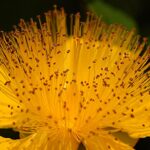
St. John’s Wort
A traditional herb used to support mild low mood and related symptoms.
St. John’s Wort (Hypericum perforatum) is a perennial herb whose active portion is primarily the flowering tops, notably the flowers and young leaves. Traditionally used both internally for low mood and menopausal complaints and externally as an oil macerate for superficial wounds, burns and bruises, the plant contains hyperforin, hypericin and a range of flavonoids and phenolic compounds.
Clinical evidence indicates benefit for mild to moderate depression, though effects vary by individual. Typical standardized extract doses reported in studies range from 300–900 mg per day. St. John’s Wort can cause photosensitivity and acts as a potent enzyme inducer that may interact with many medications; avoid concomitant use with certain drugs and consult a healthcare professional before starting.
At a Glance
Native to Europe, North Africa, the Middle East and western Asia, St. John’s Wort is a perennial herb with bright yellow flowers and leaves that appear perforated when held to the light.
It is used internally for mild to moderate depressive symptoms and certain menopausal complaints, and externally as an oil macerate for superficial wounds, burns and bruises.
| Common name |
|
|---|---|
| Scientific name | Hypericum perforatum L. |
| Plant family | Hypericaceae |
| Origin |
|
| Parts used |
|
| Active compounds |
|
| Main benefits |
|
| Available forms |
|
Origin & History
Native to Europe, North Africa, the Middle East and western Asia, St. John’s Wort thrives in dry, sunny habitats and is commonly found along roadsides, in fields and meadows. Its bright yellow flowers and leaves that appear perforated in strong light helped make the plant easily recognizable and widely harvested.
Historically, dried flowers were taken orally for neuralgia, mood disturbances, insomnia and anxiety, while a macerated oil made from fresh flowering tops was applied externally to aid superficial wounds, burns and bruises. The herb also held a strong place in folk ritual and seasonal traditions across Europe. In many European folk traditions St. John’s Wort was gathered on St. John’s Day and kept in houses as a protective charm against spirits and illness.
Composition & Active Compounds
St. John’s Wort is a perennial herb with bright yellow, five-petaled flowers and small leaves that appear perforated when held to light; the flowering tops, including flowers and young leaves, are the most commonly collected parts. Chemically the plant contains a mix of phenolic compounds and phloroglucinol derivatives together with naphthodianthrones, flavonoids, tannins and a small essential oil fraction, which determine extraction profiles and standardization characteristics.
Hyperforin is regarded as the primary active constituent and is a focal compound in standardized extracts made from the flowering tops and young leaves.
- Hyperforin: a phloroglucinol derivative considered a major active constituent in extracts
- Adhyperforin: a related phloroglucinol derivative occurring alongside hyperforin
- Hypericin: a red-pigmented naphthodianthrone present in leaf glands
- Pseudohypericin: a naphthodianthrone closely related to hypericin
- Naphthodianthrones: a class of pigmented compounds that includes hypericin and pseudohypericin
- Flavonoids: flavonoid glycosides such as hyperoside and rutin present in aerial parts
- Tannins and proanthocyanidins: phenolic polymers contributing to the overall chemical profile
Related Herbs
Properties & Effects
Long used in herbal medicine, St. John’s Wort is traditionally taken for mood and digestive complaints and applied externally as an oil for minor skin injuries; uses and effects may vary by individual. Research suggests it may support improvement of mild to moderate depressive symptoms in some people.
- Antidepressant: research suggests it may support relief of mild to moderate depressive symptoms in some individuals.
- Anxiety: traditionally used and studied for reducing mild anxiety or nervous tension.
- Menopausal symptoms: may support relief of certain menopausal complaints such as low mood and hot flashes for some women.
- Dyspepsia: traditionally used to alleviate digestive discomfort and mild indigestion.
- Topical wound care: an oil macerate is traditionally used to aid healing of superficial wounds, first-degree burns and bruises.
- Muscle pain: topical preparations have been used to help relieve mild muscle aches.
Dosage & How to Use
Dosage recommendations for St. John’s Wort vary by preparation; follow product labeling or professional guidance.
| Mild to moderate depression |
|
|---|
Safety, Side Effects & Contraindications
Some people should avoid St. John’s Wort or seek medical advice before using it because of specific risks and interactions. Pregnant or breastfeeding people are advised not to use it without medical supervision, and it is not recommended for bipolar disorder; additionally, the herb is a potent enzyme inducer that can alter the effects of many prescription medicines.
St. John’s Wort is generally well tolerated in recommended doses, though occasional adverse effects reported include allergic reactions, mild gastrointestinal upset, headache and fatigue; these effects have been described as uncommon and typically mild. The plant can cause photosensitivity in some individuals, and its enzyme-inducing activity may reduce the effectiveness of other drugs or change their side-effect profiles, so consult a healthcare professional before starting treatment; individual responses vary.
- Pregnancy and breastfeeding: use only with medical advice — not recommended without supervision.
- Bipolar disorder: not recommended for people with bipolar disorder.
- Photosensitivity: may increase sensitivity to sunlight; consider sun protection and caution with prolonged exposure.
- Drug interactions: induces drug-metabolizing enzymes and can reduce effectiveness or alter safety of other medicines — examples include contraceptive pills, immunosuppressants (cyclosporine, tacrolimus), oral anticoagulants (warfarin, fluindione) and digoxin.
May interact with many prescription medicines and can increase sun sensitivity; consult a healthcare professional before use, especially if pregnant, breastfeeding, taking medications, or managing bipolar disorder.