
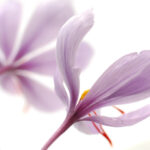
Saffron
A fragrant spice traditionally used to support mood and relaxation.
Saffron (Crocus sativus) is a cultivated crocus prized for its vivid red floral stigmas, used worldwide as an aromatic spice and natural colorant. The dried stigmas contain characteristic compounds—crocin, crocetin, picrocrocin and safranal—that contribute to saffron’s color, flavor and documented bioactivity. Originating in the East and now cultivated in regions such as Spain, Greece, India, Iran and Morocco, saffron’s harvest is labor-intensive and the product is commonly available as threads, powder, tinctures, extracts and encapsulated supplements.
In phytotherapy saffron is traditionally used to support mood and relaxation, act as a tonic and digestive aid, and has been investigated for anti-inflammatory, analgesic and antioxidant properties; individual responses may vary and effects are not guaranteed. Safety considerations include a frequently cited daily amount of about 30 mg and a general recommendation not to exceed 1.5 g per day; therapeutic use is usually contraindicated in pregnancy and lactation. Store dried stigmas airtight to protect their quality and hygroscopic nature.
At a Glance
Derived from the red floral stigmas of Crocus sativus, saffron is a highly prized spice and traditional herbal ingredient used as a colorant, flavoring and in phytotherapy. Its characteristic constituents include crocin, crocetin, picrocrocin and safranal, which contribute to its color, aroma and studied bioactivity.
| Common name |
|
|---|---|
| Scientific name | Crocus sativus |
| Plant family | Iridaceae |
| Origin | Eastern origin |
| Parts used | Stigmas (flower) |
| Active compounds |
|
| Main benefits |
|
| Available forms |
|
Origin & History
Saffron (Crocus sativus) is believed to have originated in the East and has been cultivated for more than three millennia. The plant grows from a corm rather than existing in the wild, is planted in late summer and flowers in autumn; the three vivid red stigmas from each flower are harvested by hand and are prized for culinary, dyeing and therapeutic uses. Major cultivation regions today include Spain, Greece, India, Iran and Morocco, with smaller-scale production in countries such as France, Italy, Turkey, China and the United States.
Cleopatra reportedly used saffron in her baths for cosmetic and aphrodisiac purposes. Across history saffron has played roles in many cultures: ancient Egyptian healers used it for gastrointestinal complaints, the Greeks and Romans employed it as perfume and deodorant, it became part of traditional remedies in China, and medieval Europe valued it for medicinal uses; the labor-intensive harvest of the red stigmas led to saffron being called “red gold.”
Composition & Active Compounds
Saffron appears as fine red threads—the dried floral stigmas of Crocus sativus—harvested by hand from a solitary autumn flower; these threads contain pigments, volatile oils and bitter glycosides that define saffron’s color, aroma and taste. The main chemical constituents explicitly associated with saffron are crocin, crocetin, picrocrocin and safranal, which are responsible for its characteristic color, flavor and aromatic profile and are the focus of phytochemical study.
The dried floral stigmas are the part most used in supplements and herbal preparations.
- Crocin: water-soluble carotenoid pigment responsible for saffron’s vivid color.
- Crocetin: a carotenoid-related compound that contributes to color and is chemically related to crocin.
- Picrocrocin: a glycoside precursor that contributes to saffron’s bitter taste.
- Safranal: a volatile compound that gives saffron its distinctive aroma and is a principal active constituent.

Properties & Effects
Used historically as both a spice and a folk remedy, saffron is traditionally associated with support for mood, vitality, digestion and symptomatic relief for pain and inflammation. Effects can vary between individuals and evidence ranges from traditional use to preliminary research.
Among its traditional and studied uses, saffron is most noted for supporting relaxation and mood.
- Mood support: Research suggests saffron may support relaxation and help with mild mood disturbances in some individuals.
- Aphrodisiac and libido: Traditionally used to support sexual desire and may help with low libido in both men and women.
- Tonic and antifatigue: Traditionally used as a tonic that may help reduce feelings of fatigue and support energy during periods of overwork.
- Anti-inflammatory and analgesic: May support relief of local aches such as joint pain, toothache and painful menstruation.
- Antioxidant: Contains antioxidant constituents and may help protect cells from oxidative stress.
- Digestive and liver support: Traditionally used to aid digestion and support liver and gastrointestinal comfort.
- Cholesterol support: Some research suggests saffron may contribute to lowering blood lipid levels such as cholesterol.
Dosage & How to Use
Follow recommended amounts and safety guidance when using saffron.
| Recommended daily dose |
|
|---|
Safety, Side Effects & Contraindications
When used within recommended amounts, saffron is reported in the provided facts to have no recorded side effects, but individual sensitivity can occur and effects may vary between people.
Therapeutic use is not recommended during pregnancy and lactation. The facts supplied do not list specific medication interactions or other condition-related warnings; seek professional advice before combining saffron with prescription drugs or when managing chronic health issues.
- Pregnancy and lactation: therapeutic use is not recommended for pregnant or breastfeeding women.
Avoid therapeutic use during pregnancy or breastfeeding; consult a healthcare professional before use, especially if taking medications or managing chronic health conditions.