
Cypress
A venotonic evergreen used to support healthy circulation and aromatic extracts.
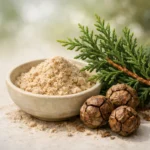
Cypress (Cupressus sempervirens) is a slender evergreen native to the Mediterranean and parts of Asia, prized for ornamental planting and windbreaks. The species’ cones and essential oil have long been used in perfumery and phytotherapy; traditional use and contemporary studies have focused on venous circulation, antiviral and antimicrobial properties, and applications in aromatherapy and dietary supplements. Uses and effects may vary by individual.
Cones (often harvested green) are the primary part used and contain tannins, flavonoids, monoterpenes and sesquiterpenes such as cedrol and cymol. Extracts are available in capsules, tablets and as an essential oil; concentration and formulation influence activity. Avoid use during pregnancy and lactation according to product guidance, and consult a qualified healthcare professional before beginning any supplement due to possible sensitivities or interactions.
At a Glance
A narrow, long-lived evergreen native to the Mediterranean and parts of Asia, cypress is cultivated for ornamental planting, windbreaks and for its aromatic cones.
Cones and their extracts are used in phytotherapy and aromatherapy for venous support, antimicrobial and antiviral applications.
Cones are often harvested green and processed into extracts or distilled to produce an essential oil; products appear as capsules, tablets and oils. Uses and effects may vary by individual.
| Common name |
|
|---|---|
| Scientific name | Cupressus sempervirens |
| Plant family | Cupressaceae |
| Origin |
|
| Parts used | Cones (female flowers) |
| Active compounds |
|
| Main benefits |
|
| Available forms |
|
Origin & History
Native to the Mediterranean basin and parts of western Asia, Cypress (Cupressus sempervirens) favors dry, often calcareous soils and commonly grows on hillsides and rocky slopes. The slender, long-lived trees can reach up to 20 metres with dense, scale-like leaves; the Latin name sempervirens means “always green” and reflects the species’ persistent foliage. Cones develop at branch tips and are typically collected green for extraction.
Historically the cones and essential oil were used in perfumery and in folk remedies across the Mediterranean and Near East. Used for more than 4000 years, cypress cones and oil were applied in traditional practices for venous and urinary complaints and were recorded by physicians such as Hippocrates. The species also served ornamental and ceremonial roles—planted as windbreaks, in cemeteries and as feature trees—and harvesting often remains manual to preserve the compounds present in unripe cones.
Composition & Active Compounds
Cypress is a slender evergreen tree with grey‑reddish bark and dense, scale‑like dark green leaves; its female cones are grey‑green and are commonly harvested green for processing. The cones and other tissues contain a complex mixture of polyphenols and volatile terpenoids—tannins and flavonoids alongside monoterpenes and sesquiterpenes such as cedrol, cymol and furfurol—which shape the plant’s aroma and are the chemical basis for traditional and researched uses. The cones (female fruits) are the part most commonly used in supplements and essential oil production.
- Tannins: astringent polyphenols including catechin and epicatechin
- Flavonoids: diverse polyphenols such as amentoflavone and quercetin derivatives
- Leucoantocyanins: colorless flavonoid derivatives related to proanthocyanidins
- Monoterpenes: volatile terpenes (e.g. α‑pinene, limonene) contributing to aroma
- Sesquiterpenes: larger terpenes including cedrol with a woody scent
- Cedrol: sesquiterpene alcohol prominent in the essential oil
- Cymol: monoterpene component found in the oil
- Furfurol: furan derivative present in cone extracts
Properties & Effects
Traditionally, cypress has been used primarily for circulatory and respiratory-related support and as an aromatic remedy in topical and internal preparations. Venotonic effects for circulation are among the most reported uses and studied actions.
- Venotonic: May support healthy venous circulation and ease sensations of heavy or tired legs.
- Antiviral: Research suggests extracts may exhibit antiviral activity against certain viruses such as herpes simplex in laboratory studies.
- Antimicrobial: Studies indicate essential oil or cone extracts may inhibit growth of some bacterial and fungal species in vitro.
- Anti-inflammatory: May support reduction of local inflammation when used in traditional or topical applications.
- Analgesic: May provide mild pain‑relieving effects in some topical or extract uses.
- Antioxidant: May support protection against oxidative stress through constituents with antioxidant activity.
- Immunostimulant: Traditionally used and researched for supporting immune response, with some studies suggesting modest immune‑supporting effects.
Dosage & How to Use
Reported dosages vary by intended use and formulation; follow product labeling and consult a qualified professional before use.
| Antimicrobial and antiviral (preventive) |
|
|---|---|
| Antimicrobial and antiviral (curative) |
|
| Venotonic |
|
Safety, Side Effects & Contraindications
The provided facts state that cypress supplements are not recommended during pregnancy or breastfeeding; this is the primary explicit contraindication reported. No side effects are listed in the source material to date, but individual sensitivities, allergic reactions or topical irritation remain possible and any unexpected symptoms should prompt discontinuation and medical advice.
No specific drug interactions are described in the provided facts; however, because formal interaction data are limited, consult a qualified healthcare professional before use if taking prescription medications, managing chronic conditions, or combining cypress products with other supplements or essential oils.
- Pregnancy and lactation: Not recommended for use during pregnancy or while breastfeeding.
Not recommended during pregnancy or breastfeeding; consult a healthcare professional before use, especially if taking medications or managing health conditions.