
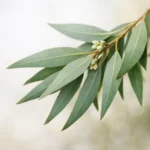
Eucalyptus Radiata
An essential oil prized for supporting respiratory comfort and mucus clearance.
Eucalyptus Radiata is a Myrtaceae tree native to Australia, prized for a clear, slightly sweet essential oil distilled from its leaves. The oil is notable for a high 1,8-cineol (eucalyptol) content and a profile of monoterpenes and sesquiterpenes, giving it a characteristic fresh aroma and versatile aromatic applications.
Traditionally and in modern aromatherapy the leaf-derived essential oil is used for its antiseptic, expectorant and mucolytic properties and is also applied topically in diluted form for certain skin concerns. Uses and effects vary by individual; observe safety guidance and contraindications (for example, avoid use in pregnancy, in children under three, and in people with epilepsy) and consult a qualified practitioner when in doubt.
At a Glance
A eucalyptus species in the Myrtaceae family, Eucalyptus radiata is valued for the leaf-derived essential oil produced by steam distillation and for its fresh, slightly sweet aroma.
The oil is rich in 1,8-cineole and a range of monoterpenes and sesquiterpenes, and is commonly used in aromatherapy and topical preparations for antiseptic and expectorant applications. Uses and effects vary by individual and safety guidance should be followed.
| Common name | Eucalyptus radiata |
|---|---|
| Scientific name | Eucalyptus radiata |
| Plant family | Myrtaceae |
| Origin |
|
| Parts used | Leaves |
| Active compounds |
|
| Main benefits |
|
| Available forms |
|
Origin & History
Native to the coastal regions of southern Australia, Eucalyptus radiata is a tall, adaptable tree with fibrous, peeling bark and lance-shaped leaves. The species tolerates a range of climates and has been introduced and cultivated in parts of South America, Africa and Europe, where it often grows in warmer or Mediterranean-type locales.
Aboriginal peoples traditionally used fresh leaves of Eucalyptus radiata topically to aid wound care. In more recent centuries the leaves have been steam-distilled to yield an essential oil rich in 1,8‑cineole (eucalyptol), and that oil has been used in various herbal and aromatic preparations in different cultures. Uses and effects may vary by individual; follow safety guidance and contraindications when considering use.
Composition & Active Compounds
Eucalyptus radiata is a large, straight-trunked tree with fibrous, peeling bark and lance-shaped leaves that release a fresh, slightly sweet aroma when crushed. The leaf oil is chemically dominated by oxygenated terpenes and a range of monoterpenes and sesquiterpenes; these volatile constituents give the oil its scent profile and underlie its traditional aromatic and topical applications. The essential oil distilled from the leaves is dominated by 1,8‑cineole (eucalyptol), the principal compound in most supplements and aromatic preparations.
- 1,8‑cineole: major oxide in the oil, key to the characteristic eucalyptus aroma
- α‑pinene: common monoterpene contributing to the resinous, pine-like notes
- limonene: monoterpene with citrus‑like scent
- α‑terpineol: monoterpenol present in the oil, contributes to fragrance
- sesquiterpenes: heavier hydrocarbons that add depth to the oil’s profile
- monoterpenic aldehydes: oxygenated monoterpenes found in smaller amounts
Related Herbs

Properties & Effects
Eucalyptus radiata is traditionally known for its leaf-derived essential oil and its use in aromatic and topical preparations focused on respiratory and skin concerns.
The most well-documented property is its use as an expectorant and mucolytic for upper respiratory symptoms.
- Expectorant: may support clearance of mucus in productive coughs and ease breathing.
- Mucolytic: may help loosen and thin secretions to assist expectoration.
- Anticatarral: traditionally used to reduce nasal and nasopharyngeal mucus and related discomfort.
- Antiseptic: may be applied topically in diluted form to help reduce surface microbes on the skin.
- Antibacterial (skin): traditionally used for some skin complaints such as acne to help manage excess oil and bacterial proliferation.
- Antiviral: used in preparations aimed at respiratory infections and sometimes investigated for activity against respiratory viruses.
- Immunostimulant: traditionally considered supportive for general immune response in some herbal systems.
- Wound healing: used historically to aid superficial wound care and skin repair when applied appropriately.
Dosage & How to Use
Traditional administration methods and recommended amounts from herbal references are summarized below.
| Antiseptic, expectorant and mucolytic |
|
|---|---|
| Anticatarral |
|
| Anti-acne |
|
| Disinfectant |
|
Safety, Side Effects & Contraindications
Eucalyptus radiata essential oil should be used with caution because certain groups are specifically advised to avoid it; the oil may cause local irritation or allergic skin reactions in some people and inhalation can irritate the eyes or airways. Those with seizure disorders or a history of convulsions, young children and pregnant people are highlighted in safety guidance as needing to avoid or limit use.
The provided facts do not list specific drug interactions, so consult a qualified healthcare professional before combining Eucalyptus radiata preparations with other medications or if there are chronic health conditions. Uses and effects vary by individual; stop use if adverse reactions occur and seek medical advice as needed.
- Pregnancy: contraindicated during pregnancy.
- Young children: avoid use in children under three years old.
- Epilepsy: prohibited for people with epilepsy.
- History of convulsions: not recommended for children under twelve with a history of seizures.
Avoid during pregnancy and in young children; not recommended for people with epilepsy or a history of convulsions. Consult a healthcare professional before use, especially if pregnant, nursing, taking medications, or managing chronic health conditions.