
Clay
Mineral-rich clay for topical purification and occasional digestive comfort.
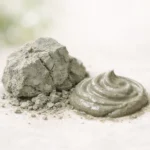
Clay is a natural, mineral-rich material formed by the weathering of bedrock and has been used since antiquity for skin, hair and wellness applications. Common types include green clay, white clay (kaolin) and montmorillonite; these clays act as absorbent and adsorbent agents that can help draw out oils, impurities and odors and are used topically as masks, poultices, deodorants and in cosmetic preparations. Some clays are also used internally in powdered or supplement form by some people for digestive comfort, though effects vary by individual.
Available as dry powder, ready-made paste, suspensions and formulated supplements, clay is typically applied externally to the affected area—a small amount of paste for a facial mask or hair treatment—or taken internally after dilution in water when appropriate. External use is generally well tolerated but a patch test is advised; internal use is not recommended for people with a history of intestinal obstruction, significant chronic constipation or a hernia, and clay can bind oral medications so spacing intake by about two hours and maintaining adequate hydration are commonly advised precautions.
At a Glance
Clay is a naturally occurring mineral material formed by the breakdown and weathering of bedrock; it is widely used externally for skin and hair care and, in some preparations, taken internally for digestive comfort.
Different types such as green clay, white kaolin and montmorillonite differ in mineral composition and exhibit absorbent, adsorbent and remineralizing properties.
| Common name |
|
|---|---|
| Origin | Weathering of bedrock |
| Parts used | Clay deposits |
| Active compounds |
|
| Main benefits |
|
| Available forms |
|
Origin & History
Clay forms from the long-term weathering and breakdown of bedrock and accumulates in deposits in soils, riverbeds and sedimentary basins around the world; its mineral composition and color vary with local geology. Found in many habitats, different clay types such as kaolin, montmorillonite and illite have been collected and used across regions for practical, cosmetic and ritual purposes.
Ancient Egyptians used clay in topical preparations for wounds and incorporated it into funerary practices during mummification. Over millennia clay has appeared in many traditions: as pottery and construction material, as therapeutic mud baths combining thermal waters and mineral muds, and as topical masks, poultices and cosmetic ingredients; these cultural uses reflect clay’s absorbent and mineral-rich character rather than modern clinical endorsement.
Composition & Active Compounds
Clay appears as powders, pastes or suspensions in colors ranging from green and white to yellow, red or blue; textures vary from layered (phyllitic) to fibrous depending on the mineral composition. Chemically, clays are hydrated aluminum silicates composed primarily of silica and alumina and contain clay minerals such as kaolinite, montmorillonite and illite along with variable amounts of iron, magnesium, calcium, sodium, potassium and manganese.
Montmorillonite and kaolinite are key clay minerals commonly used in topical and supplemental preparations.
- Silica: primary mineral constituent of many clays
- Alumina (aluminum oxides): major component of clay minerals
- Montmorillonite: high adsorption capacity, common swelling clay
- Kaolinite: fine white clay used in cosmetic formulations
- Illite: layered clay mineral
- Iron: mineral that influences color and trace content
- Magnesium: trace mineral found in some clays
- Calcium: mineral constituent
- Sodium: present in certain clay deposits
- Potassium: present in certain clay deposits
- Manganese: trace element found in some clays
Related Herbs
Properties & Effects
Clay is traditionally known as a mineral-rich, absorbent material used mainly for external skin and hair care and, in some cases, as an internal remedy for digestive discomfort. Uses and effects vary by individual and by clay type and formulation.
Its most well-documented property is topical purification and the ability to adsorb oils and surface impurities from skin and hair.
- Skin and hair purification: Clay may support removal of excess oil and surface impurities when applied externally.
- Deodorizing: Clay may help reduce or neutralize body odors in topical applications.
- Wound support: Clay has traditionally been used externally to help protect and soothe minor skin wounds.
- Remineralization: Clay may contribute minerals topically that help restore skin radiance and texture for some users.
- Hydration and softening: Clay may have soothing and softening effects on skin when used in appropriate formulations.
- Digestive comfort: Certain clays taken internally are traditionally used to help relieve bloating and gas and to protect the digestive mucosa for symptomatic comfort in some people.
Dosage & How to Use
Dosage and application depend on whether clay is used externally or taken internally.
| External use |
|
|---|---|
| Internal use |
|
Safety, Side Effects & Contraindications
External use of clay is generally well tolerated, though a small patch test is recommended to check for local sensitivity or irritation. Internal use requires more caution: some clay types are not recommended for people with certain intestinal conditions, and adequate hydration is advised when ingesting clay.
There are few serious side effects reported for topical use, but internal use can interact with oral medications because clay can absorb other compounds; spacing medication and clay intake by about two hours is commonly recommended to reduce this risk. Individuals with specific medical histories should avoid internal use and consult a healthcare professional before use.
- History of intestinal obstruction: internal use is not recommended for people with prior obstruction
- Significant chronic constipation: avoid internal use if chronic severe constipation is present
- Presence of a hernia: internal use is not recommended for those with a hernia
- Medication interactions: clay can bind oral drugs; take medications two hours apart from clay and consult a professional
- Patch test: perform a small-area tolerance test for topical applications to check for irritation
Clay can interact with oral medications and some clay types are not recommended for people with intestinal obstruction, severe chronic constipation or a hernia; consult a healthcare professional before internal use.