
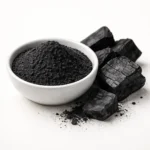
Activated Charcoal
A porous adsorbent traditionally used to support digestive comfort.
Activated Charcoal is a highly porous black powder produced by carbonizing plant materials such as coconut shells or hardwoods and then activating the char with steam to develop extensive surface porosity. This structure yields strong adsorbent properties: molecules and gases can adhere to the charcoal’s surface, a physical mechanism that has informed both historical uses and contemporary applications.
Commonly used for digestive support—including reduction of gas, bloating and flatulence—activated charcoal is also promoted for its capacity to bind certain toxins, pathogens, pesticides and some chemical compounds and aid their elimination in stool. Uses and effects may vary by individual; safety considerations include contraindications in serious gastrointestinal disorders, the potential for constipation with prolonged use, and interference with absorption of medications and nutrients, so timing and duration of use warrant careful attention.
At a Glance
Produced by carbonizing plant materials and activating the charcoal with steam, activated charcoal is a black, highly porous powder prized for its large internal surface area and physical adsorptive capacity. This porosity enables molecules and gases to adhere to the surface, which underlies traditional and contemporary uses for binding certain compounds and supporting digestive comfort.
| Common name |
|
|---|---|
| Origin |
|
| Parts used | Charcoal (whole) |
| Active compounds | Elemental carbon |
| Main benefits |
|
| Available forms |
|
Origin & History
Activated charcoal is not a single plant but a processed product obtained by carbonizing and then activating various plant materials, including coconut shells and hardwoods such as willow, poplar, lime and ash. The activation step, typically involving steam, creates extensive porosity and a large internal surface area that define its physical properties rather than a natural habitat in the botanical sense.
Traces of charcoal use appear in ancient records, and it was documented as a remedy for poisoning in ancient Egypt during the reign of Amenhotep I. Over centuries different cultures have prepared and used charcoal from locally available woods for practical and therapeutic purposes; in more recent times its porous form has been applied in contexts related to digestive complaints and as a binding agent for certain toxins in traditional practices.
Composition & Active Compounds
Activated charcoal appears as a black, porous powder or granular material with a large internal surface area created during the activation process; its functionality derives from a matrix composed predominantly of elemental carbon arranged in a highly porous structure that provides extensive surface sites for adsorption. These physical and chemical characteristics are central to how activated charcoal interacts with gases, liquids and certain dissolved substances.
Elemental carbon is the principal active constituent in activated charcoal and is responsible for its adsorptive capacity.
- Elemental carbon: Primary constituent; provides a high-surface-area porous matrix that enables adsorption of molecules and gases.



Properties & Effects
Activated charcoal is traditionally known as a porous black powder used to support digestion and address certain gastrointestinal complaints in folk and clinical contexts. Its adsorbent effect is the most widely reported and documented property.
- Adsorbent effect: may support reduction of unwanted substances in the digestive tract and lower their presence in stool.
- Detoxifying properties: traditionally used to assist elimination of certain toxins and contaminants.
- Digestive support: may help reduce gas, bloating and belching.
- Support for diarrhea and abdominal discomfort: commonly used for mild cases of diarrhea or stomach pain and some food-related digestive upsets.
Dosage & How to Use
Basic dosing guidance from the provided facts is summarized below.
| Prevent excessive intestinal gas |
|
|---|---|
| Short-term use |
|
| Avoid co-administration |
|
Safety, Side Effects & Contraindications
People with significant gastrointestinal disorders, such as peptic ulcers or intestinal obstruction, should avoid activated charcoal and seek medical guidance before use.
Known side effects include possible constipation with extended use. Activated charcoal can interfere with the absorption of medications, vitamins and minerals, and it is not recommended during meals or taken at the same time as other substances. Effects may vary by individual, so consult a healthcare professional if taking prescription medicines or if uncertain about safety.
- Contraindications: Use is contraindicated for people with significant gastrointestinal disorders such as peptic ulcers or intestinal obstruction.
- Prolonged use: Extended use may cause constipation and other digestive discomfort; limit to short courses of around 7–10 days.
- Timing and interactions: Avoid taking with meals or simultaneously with medications or supplements because charcoal can reduce their absorption.
Avoid use if you have significant gastrointestinal disorders; activated charcoal can interfere with medication and nutrient absorption—consult a healthcare professional before use.