
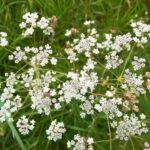
Caraway
A traditional digestive aid for easing bloating and supporting digestion.
Caraway (Carum carvi) is a biennial herb in the Apiaceae family whose crescent-shaped seeds are widely used in European, Asian and North African cuisines to flavor breads, cheeses and sauerkraut. The seeds yield an essential oil predominantly containing carvone and limonene and are notable for a warm, anisic‑lemon aroma that distinguishes them from cumin and anise.
Traditionally employed for digestive support—as a carminative and antispasmodic—caraway is used in infusions, ground preparations and as a diluted essential oil; the oil has also been applied topically as an expectorant in chest massage. Uses and effects vary by individual; essential oil requires dilution and is contraindicated in young children and in some sensitive populations, so consult a qualified healthcare professional for personalized advice.
At a Glance
Caraway is a biennial herb in the Apiaceae family cultivated for its aromatic crescent-shaped seeds used in culinary and herbal preparations.
Its seeds produce an essential oil rich in carvone and limonene and are traditionally used for digestive support and as an expectorant.
| Common name |
|
|---|---|
| Scientific name | Carum carvi |
| Plant family | Apiaceae |
| Origin |
|
| Parts used | Seeds (fruits) |
| Active compounds |
|
| Main benefits |
|
| Available forms |
|
Origin & History
Caraway is native to the temperate regions of Europe, Asia and North Africa and commonly grows in open meadows and cultivated fields as a biennial herb. The plant bears umbels of small white or pink flowers and produces crescent-shaped brown fruits (commonly called seeds) that are harvested for culinary and medicinal use.
Archaeological finds show caraway seeds were used in prehistoric dwellings and placed in burials in ancient Egypt, reflecting early cultural importance. In European history the seeds were widely adopted in medieval cuisine and household medicine, used to flavor breads, cheeses, fermented dishes such as sauerkraut and employed in folk traditions for digestive complaints; the essential oil has also been used in topical preparations for respiratory congestion in traditional practice.
Composition & Active Compounds
Caraway is a biennial herb with slender, hollow stems, feathery leaves and umbrella-like clusters of small white or pink flowers; the mature fruits (commonly called seeds) are brown, crescent-shaped achenes about 3–6 mm long. The seeds are rich in an essential oil and also contain flavonoids, tannins, polyacetylenes, polysaccharides, proteins, lipids and a range of mono- and sesquiterpenes.
The seeds are the primary part used in supplements, yielding an essential oil dominated by the monoterpene carvone.
- Carvone: monoterpene ketone that is a major constituent of the essential oil and contributes to aroma.
- Limonene: monoterpene present in the essential oil, associated with citrus-like scent.
- Carvacrol: monoterpenoid found among essential oil components.
- Carvenone: monoterpenoid ketone noted among the oil constituents.
- γ-Terpinene: monoterpene hydrocarbon in the essential oil profile.
- α-Pinene: monoterpene commonly occurring in essential oils.
- Linalool: oxygenated monoterpene contributing to fragrance.
- p-Cymene: aromatic monoterpene hydrocarbon in the oil fraction.
- Germacrene: sesquiterpene found among volatile constituents.
- Flavonoids: polyphenolic compounds present in the seeds.
- Tannins: astringent phenolic compounds detected in plant material.
- Polyacetylenes: classes of bioactive polyunsaturated compounds reported in the plant.
- Polysaccharides: carbohydrate constituents present in seed tissue.
Properties & Effects
Caraway seeds and their essential oil are traditionally known for use in digestive remedies and for occasional topical use to ease respiratory congestion. Folk and clinical research sources describe a range of effects attributed to the seeds and their oil.
Caraway is most widely recognized for traditional support of digestion and relief of bloating and gas.
- Digestive support: Traditionally used to support normal digestion and to help relieve bloating, indigestion and flatulence.
- Carminative: May support reduction and expulsion of intestinal gas.
- Choleretic and cholagogue: May support bile secretion and flow to assist digestion of fats.
- Antispasmodic: May help ease stomach cramps and intestinal spasms.
- Expectorant: Traditionally used in diluted topical preparations to help loosen chest congestion and ease breathing.
- Galactagogue: Traditionally reported to support milk production during lactation in some uses.
- Emenagogue: Traditionally reported to influence or help regulate the menstrual cycle in some folk applications.
- Antiparasitic: Some studies and traditional uses suggest activity against intestinal parasites and worms.
- Hypoglycemic: Preliminary research suggests it may help lower blood sugar levels in some contexts.
- Hypolipidemic: Preliminary research suggests it may help reduce blood lipid levels in some contexts.
Dosage & How to Use
Below are traditional dosage examples and common ways caraway preparations are used; individual needs and product instructions may vary.
| Infusion (digestive) | 1 teaspoon of slightly crushed seeds in 200 ml boiling water |
|---|---|
| Dietary supplements |
|
| Essential oil — oral (digestive) |
|
| Essential oil — topical (respiratory massage) |
|
Safety, Side Effects & Contraindications
Some people should avoid caraway or use it only under medical supervision. Known contraindications include hypersensitivity to plants in the Apiaceae family; the essential oil is not recommended for children under 6 years or for people who are pregnant or breastfeeding. Individuals with liver disease, achlorhydria or biliary conditions should seek medical advice before using caraway preparations. Reported adverse effects include allergic reactions and local skin or mucous membrane irritation, particularly if the essential oil is used undiluted.
Take precautions when using the essential oil: always dilute before oral or topical use, perform a patch test to check for sensitivity, and avoid application to broken skin, around the eyes or on mucous membranes. Do not use the essential oil for more than 10 consecutive days without professional guidance, and consult a qualified healthcare practitioner about potential interactions with medications or pre-existing health conditions.
- Hypersensitivity to Apiaceae: avoid caraway if allergic to plants in this family (for example fennel, anise, celery).
- Children under 6 years: essential oil is contraindicated in young children.
- Pregnancy and breastfeeding: essential oil is contraindicated during pregnancy and lactation.
- Liver disease, achlorhydria, biliary pathology: seek medical advice before use.
- Topical precautions: dilute oil, perform a patch test, and avoid use on broken skin or near eyes and mucous membranes.
- Duration of essential oil use: avoid using the essential oil for more than 10 consecutive days without professional guidance.
Avoid caraway if allergic to Apiaceae plants; essential oil is contraindicated in pregnancy, breastfeeding and children under 6—consult a healthcare professional if you have liver, biliary or gastric conditions or are taking medications.