
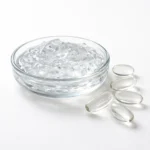
Hyaluronic Acid
A hydrating polymer that supports skin moisture and tissue cushioning.
Hyaluronic Acid is a naturally occurring glycosaminoglycan found throughout the extracellular matrix, with more than half of the body’s hyaluronan concentrated in the dermis. Noted for an exceptional water‑binding capacity—able to retain up to 1,000 times its weight in water—it contributes to skin hydration, tone and elasticity while helping form a protective barrier against environmental stressors.
Commercial hyaluronic acid is commonly produced by biotechnological fermentation and is available as injectables, topical gels or creams, and oral capsules. Uses range from aesthetic fillers and joint viscosupplementation to oral skin‑care supplements; reported dosing for supplements often falls between 120 and 240 mg per day. Individual responses vary, and contraindications include allergy to hyaluronic acid; use during pregnancy or lactation is not recommended due to limited data.
At a Glance
A polysaccharide abundant in the extracellular matrix, hyaluronic acid is concentrated in the skin, eyes and joints and contributes to tissue hydration and mechanical support.
It can retain large amounts of water, is produced industrially by bacterial fermentation and is supplied as injectables, topical products and oral supplements.
| Common name |
|
|---|---|
| Origin | Biotechnological fermentation (bacterial fermentation) |
| Parts used |
|
| Active compounds |
|
| Main benefits |
|
| Available forms |
|
Origin & History
Hyaluronic acid was first identified in 1934 in the vitreous humor of cattle and takes its name from the Greek root meaning vitreous. It is a naturally occurring polysaccharide in the extracellular matrix, with highest concentrations in the dermis, eyes and joint cartilage where it contributes to tissue hydration and structural support.
Historically, hyaluronic acid was extracted from rooster combs before production shifted to biotechnological fermentation for improved safety and yield. Clinical use in humans began in the 1970s in ophthalmic surgery, and applications later expanded into joint viscosupplementation, injectable aesthetic fillers, topical cosmetics, oral supplements, veterinary medicine and dentistry.
Composition & Active Compounds
Hyaluronic acid is a non‑sulfated glycosaminoglycan and a simple polysaccharide that typically appears as a viscous, hygroscopic material; chemically it is built from repeating disaccharide units composed of glucuronic acid and N‑acetylglucosamine. These constituents form a high‑molecular‑weight polymer whose size influences viscoelastic and water‑binding properties that underlie hyaluronan’s functions in tissue hydration and mechanical support.
- Hyaluronic acid: repeating disaccharide polymer responsible for water‑binding and viscoelastic properties
- Glucuronic acid: acidic monosaccharide that alternates in the polymer and contributes negative charge
- N-acetylglucosamine: amino sugar that alternates with glucuronic acid in the backbone
Hyaluronic acid is the primary active compound used in supplements and clinical products because of its exceptional capacity to retain water and provide joint cushioning.
Related Herbs

Properties & Effects
Hyaluronic acid is traditionally known as an abundant extracellular polysaccharide that helps maintain hydration and mechanical support in skin, eyes and joints.
Its most well‑documented effect is supporting skin hydration and the maintenance of tissue moisture.
- Skin hydration: research suggests it may support skin moisture and reduce dryness.
- Antioxidant protection: it may support protection of tissues against free‑radical damage from environmental stressors.
- Joint cushioning: it may support joint comfort and provide cushioning in connective tissues.
- Inflammatory response: it may support normal inflammatory responses and related immune activity.
- Tissue repair: it may support wound healing and tissue repair processes.
Dosage & How to Use
Study doses for oral hyaluronic acid vary by intended use; the table below summarizes amounts reported in clinical trials and a general recommendation.
| Skin |
|
|---|---|
| Joint comfort |
|
| Recommended dosage | 120–240 mg per day |
Safety, Side Effects & Contraindications
Hyaluronic acid is generally considered well tolerated but should be avoided by people with known hypersensitivity to the compound; available information on safety during pregnancy and lactation is limited, so use is not recommended in those situations. The provided facts do not list specific drug interactions.
Known adverse reactions are uncommon in the data referenced, though allergic or hypersensitivity responses are the primary safety concern noted. Individual tolerability can vary and reported effects differ by formulation and route of administration.
- Allergy: Contraindicated in case of allergy to hyaluronic acid
- Pregnancy and lactation: Not recommended because there are no data on safety
Avoid if allergic to hyaluronic acid and consult a healthcare professional before use; not recommended during pregnancy or lactation due to limited data.