
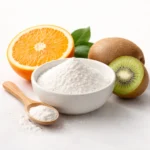
Vitamin C
A versatile vitamin supporting collagen formation and antioxidant protection.
Vitamin C (ascorbic acid) is a water-soluble nutrient found widely in fruits and vegetables. It serves as an enzymatic cofactor in processes such as collagen synthesis and supports iron absorption, while also acting as an antioxidant in the body’s aqueous environments, contributing to cellular vitality and tissue maintenance.
Dietary sources (citrus, berries, peppers, leafy greens) and supplemental formats (including conventional and liposomal preparations) differ in dose and bioavailability, and recommended intake varies with age, smoking status, and physiological needs. Uses and effects may vary by individual — follow established dosage guidance and seek qualified advice when considering supplementation to balance potential benefits and tolerability.
At a Glance
Vitamin C is a water-soluble micronutrient found mainly in fruits and vegetables that acts as an enzymatic cofactor and functions in antioxidant reactions. It contributes to collagen synthesis, supports iron absorption, and helps protect cells from oxidative damage, although individual responses to supplementation can vary.
| Common name |
|
|---|---|
| Scientific name | Ascorbic acid |
| Classification | Water-soluble vitamin |
| Origin | Fruits and vegetables |
| Parts used |
|
| Active compounds |
|
| Main benefits |
|
| Available forms |
|
Origin & History
Vitamin C is a water-soluble nutrient supplied primarily by fresh fruits and vegetables rather than a single plant species; particularly rich sources include acerola, guava, papaya, kiwi, parsley, peppers, broccoli and Brussels sprouts. It is sensitive to heat and certain cooking methods, while remaining stable under freezing, and the body cannot synthesize it, which makes dietary intake the main natural source.
Notably, maritime practitioners and explorers relied on citrus fruits and other fresh produce to prevent the bleeding and tissue fragility associated with prolonged lack of fresh food during long sea voyages. Observers in antiquity recorded the symptoms of deficiency, and later clinical observations and experiments established the link between fresh produce and prevention of deficiency-related disease; advances in chemistry and manufacturing eventually made isolated ascorbic acid widely available in supplemental forms.
Composition & Active Compounds
Vitamin C has a chemical structure similar to certain sugars, based on a lactone ring with ene‑diol and alcohol functions, and is present biologically mainly as ascorbic acid and its oxidized counterpart dehydroascorbic acid. These chemical forms underlie the vitamin’s role as an enzymatic cofactor and an antioxidant in the body’s aqueous compartments, and they influence absorption, distribution and cellular activity.
- Ascorbic acid: primary form of vitamin C, key enzymatic cofactor and water‑soluble antioxidant involved in collagen synthesis and redox reactions.
- Dehydroascorbic acid: oxidized form that is rapidly reduced back to ascorbic acid in tissues and contributes to circulating vitamin C pools.
Ascorbic acid is the principal active compound used in supplements and is the form most responsible for the vitamin’s biological activity.
Related Herbs

Properties & Effects
Vitamin C is traditionally known as an essential, water-soluble nutrient involved in tissue maintenance and general vitality. It is best known for supporting collagen production and tissue repair.
- Antioxidant: may support protection of cells from oxidative damage.
- Collagen synthesis and wound healing: may support collagen formation and normal tissue repair.
- Immune support: may support normal immune response and the activity of immune cells.
- Energy and vitality: may support normal energy levels and help reduce feelings of fatigue.
- Iron metabolism: may support intestinal iron absorption and maintenance of healthy iron levels.
- Mood and nervous system support: may support normal mood and emotional well-being.
Dosage & How to Use
Recommended intake varies with age, smoking status and physiological needs.
| Adults | 110 mg/day |
|---|---|
| Smokers and breastfeeding women | Up to 140 mg/day |
| Maximum recommended | 1,000 mg/day |
Safety, Side Effects & Contraindications
People with certain health conditions should use caution when considering vitamin C supplements. Those with disorders of iron metabolism, renal disease, a history of kidney stones, or glucose-6-phosphate dehydrogenase (G6PD) deficiency may require medical supervision before using supplements; hypersensitivity to the active ingredient is a contraindication.
Common side effects at higher intakes may include gastrointestinal symptoms such as cramping, gas, bloating or diarrhea, and a laxative effect can occur above a certain intake. Exceeding the maximum recommended intake (around 1,000 mg/day) may be associated with increased risk of kidney stones, iron accumulation and digestive disturbances; individual responses vary, and supplements are often taken earlier in the day because vitamin C can be stimulating.
- Disorders of iron metabolism: use caution because vitamin C enhances iron absorption and high intakes can increase iron accumulation risk.
- Renal disease or kidney stone risk: use caution due to increased risk of stone formation with high doses.
- Glucose-6-phosphate dehydrogenase deficiency: use with medical supervision, as special precautions may be needed.
- Hypersensitivity: avoid if allergic to ascorbic acid or related formulations.
May interact with disorders of iron metabolism and should be used with caution in people with renal disease, a history of kidney stones or G6PD deficiency; consult a healthcare professional before starting supplements.