
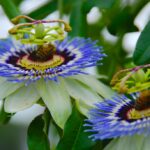
Passionflower
A traditional calming herb used to ease anxiety and support sleep.
Passionflower (Passiflora incarnata) is a climbing perennial native to tropical and subtropical regions, traditionally used for nervous complaints. The aerial parts—primarily leaves and flowers—are prepared as infusions, tinctures, extracts or powders; key constituents include flavonoids and indole alkaloids.
Limited clinical and laboratory research has reported anxiolytic and sedative effects in animal models and a small human trial (reduced preoperative anxiety), and a modulation of the GABA system has been proposed, though mechanisms are not fully defined. Uses and effects may vary by individual; traditional dosing includes infusing 1–2 g dried herb in 150 ml boiling water or 0.5–2 g powdered herb up to four times daily. Contraindications and precautions include avoiding use in children under 12, pregnancy and breastfeeding, and possible impairment of driving ability.
At a Glance
A perennial vine of the Passifloraceae family, Passiflora incarnata originates in tropical and subtropical parts of the Americas and has a long history of traditional use for nervous-system complaints.
Leaves and flowers are used in infusions, tinctures, extracts and powders, and principal constituents include flavonoids and indole alkaloids.
| Common name |
|
|---|---|
| Scientific name | Passiflora incarnata |
| Plant family | Passifloraceae |
| Origin | Tropical and subtropical regions (native to southeastern USA and Mexico) |
| Parts used |
|
| Active compounds |
|
| Main benefits |
|
| Available forms |
|
Origin & History
Passionflower (Passiflora incarnata) is native to tropical and subtropical regions of the Americas, particularly the southeastern United States and Mexico. A perennial climbing vine, it thrives in full sun on light, well-drained soils and has been acclimatized in parts of tropical Asia, southern Europe and North Africa.
Spanish missionaries gave the plant the name Passiflora after interpreting the flower’s structures as symbols of the Passion of Christ. Indigenous peoples of the Americas used the leaves and flowers to soothe nervous agitation and sleep disturbances, and European herbal traditions later incorporated passionflower into medicinal preparations and botanical collections; its flowers and leaves are traditionally harvested at flowering for use in infusions, extracts and powders.
Composition & Active Compounds
Passionflower is a perennial, woody climbing vine with alternate trilobed leaves and solitary fragrant flowers about 4–5 cm across; the flower shows a distinctive double filamentous corona in white and purple, and the edible fruit measures roughly 6–10 cm in diameter. The aerial parts used medicinally—the leaves and flowers—contain a mixture of flavonoids and indolic alkaloids as principal constituents, along with essential oils, coumarins, amino acids, carbohydrates and polyunsaturated fatty acids such as linolenic and linoleic acid.
Leaves and flowers are the plant parts most commonly used in supplements, often standardized for flavonoid content.
- Flavonoids: major class (including vitexin, isovitexin, aspenin, kaempferol, quercetin); implicated in the plant’s pharmacological profile.
- Indolic alkaloids: indole-type alkaloids (harmano, harmalina, harmol, harmina, harmalol); present in aerial parts and associated with bioactivity observed in preclinical studies.
- Essential oils: volatile fraction contributing to aroma; present in minor amounts.
- Coumarins: benzopyrone compounds present in small amounts.
- Amino acids: common plant constituents found in leaves and flowers.
- Linolenic and linoleic acids: polyunsaturated fatty acids present in the plant tissue.
- Carbohydrates: structural and storage carbohydrates in aerial parts.
Related Herbs
Properties & Effects
Passionflower is traditionally used for nervous-system complaints and sleep disturbances, with a long history as a calming botanical for anxiety and restlessness. Its most well-documented traditional and research-supported role is in relieving symptoms of anxiety and supporting sleep and relaxation.
- Anxiolytic: may help reduce feelings of anxiety or nervous tension in some people.
- Sedative: may support the onset of sleep and promote more restful sleep in cases of mild sleeplessness.
- Spasmolytic: may help relieve muscle or nerve-related spasms and associated discomfort.
- Anticonvulsant potential: research in animal models suggests it may reduce seizure frequency or severity, though human evidence is limited and further study is needed.
Dosage & How to Use
Traditional preparations use the aerial parts (leaves and flowers) in simple infusions or as dried powder.
| Infusion |
|
|---|---|
| Powdered herb |
|
Safety, Side Effects & Contraindications
Available information reports no confirmed cases of toxicity from passionflower, but certain groups are advised to avoid its use: it is not recommended for children under 12, and pregnant or breastfeeding people should not use it.
Known side effects are limited; passionflower can impair the ability to drive or operate machinery. Research suggests modulation of the GABA system, so combining passionflower with other central nervous system depressants could increase drowsiness or sedation in some individuals; uses and effects may vary by individual and anyone taking prescription medications should consult a healthcare professional before use.
- Children under 12: not to be administered
- Pregnancy and breastfeeding: avoid use during pregnancy and lactation
- Driving and machinery: may impair the ability to drive or operate machinery
Avoid use in children under 12 and during pregnancy or breastfeeding; passionflower can cause drowsiness and may interact with sedative medications—consult a healthcare professional before use.