
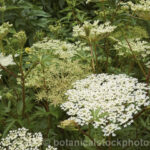
Dong Quai
Traditional root for menstrual and menopausal support.
Dong Quai (Angelica sinensis), a perennial in the Apiaceae family commonly called female ginseng, is principally used for its dried root. The root contains compounds such as ligustilide, ferulic acid, phytoestrogens and furanocoumarins and has a long history in traditional Chinese medicine for support with menstrual and menopausal complaints, circulation issues and premenstrual symptoms. Preparations most often consist of standardized root extracts, capsules, tablets or herbal decoctions and infusions.
Reported uses and effects vary by individual. Typical supplement guidance cites around 200 mg of root extract per day or a decoction made from about a teaspoon of root extract in hot water; responses, tolerability and interactions differ among users. Contraindications and cautions include pregnancy and lactation and a personal or family history of breast cancer; possible adverse effects reported include gastrointestinal upset, headache, changes in blood sugar, lowered blood pressure, somnolence and altered bleeding tendency. Consideration of existing medications and health conditions is important before using Dong Quai.
At a Glance
Dong Quai is a perennial medicinal herb native to China whose dried root has been used traditionally in East Asia for a range of women’s health concerns and circulation support.
The root contains constituents such as ligustilide and ferulic acid and is commonly prepared as extracts, capsules or herbal decoctions.
| Common name |
|
|---|---|
| Scientific name | Angelica sinensis |
| Plant family | Apiaceae (Umbelliferae) |
| Origin | Asia (China) |
| Parts used | Root |
| Active compounds |
|
| Main benefits |
|
| Available forms |
|
Origin & History
Dong Quai originates in East Asia, principally China, and is adapted to cool, mountainous habitats where it grows in forested, highland areas. Cultivation centres are found in central Chinese regions such as Gansu, Sichuan and Yunnan; the plant is a hardy perennial in the Apiaceae with hollow stems, pale green leaves and substantial, brownish roots that are harvested once the plants reach maturity after several years.
Used in traditional Chinese medicine for millennia as a general tonic for women’s health, Dong Quai later spread to neighbouring Korea and Japan and was subsequently introduced into European herbal practice. In Europe it became an ingredient in a preparation known as “Eumenol,” historically employed to address menopausal complaints including hot flashes. Historically the root has been taken as decoctions, extracts and powders and has been combined with other herbs in formulas aimed at menstrual, premenstrual and menopausal support.
Composition & Active Compounds
The plant has pale green leaves, hollow stems and a substantial brownish outer root with a white interior; in herbal preparations the dried root or its extracts are used. Chemical composition includes volatile oils, phenolic acids, phytosterols, furanocoumarins and other non-volatile constituents, which are the focus of standardised extracts and traditional preparations.
The dried root is the part most used in supplements and concentrates ligustilide and related volatile constituents.
- Ligustilide: a prominent volatile oil constituent found in root extracts, reported to be a principal active marker.
- Carvacrol: a monoterpenoid phenol present in the essential oil fraction, contributing aromatic and bioactive properties.
- Safrole: a minor oil component occurring in the root’s volatile profile.
- Phytosterols: plant sterols present in the root, part of the non-volatile fraction.
- Ferulic acid: a phenolic acid present in the root with antioxidant characteristics.
- Furanocoumarins: photoactive compounds included among the root constituents.
- Phytoestrogens: plant-derived estrogen-like compounds reported in the root.
- Polyacetylenes: non-volatile constituents occurring in the root extract.
Related Herbs


Properties & Effects
Dong Quai is traditionally used as a general tonic for female reproductive health and for support during menstrual and menopausal transitions. It is commonly taken as a root extract, decoction or supplement for symptoms linked to hormonal change and for circulation support.
Evidence and long-standing use most strongly associate Dong Quai with supporting relief of menopausal symptoms such as hot flashes and night sweats.
- Menopausal symptom support: may support reduction of hot flashes, night sweats and other common menopausal complaints.
- Menstrual pain relief: may help reduce cramps and pain associated with menstruation.
- Premenstrual symptom support: may ease symptoms such as irritability, sleep disturbance, difficulty concentrating and fatigue.
- Circulation support: may support healthy blood circulation and has been reported to modestly affect platelet aggregation, which can influence clotting and flow.
Dosage & How to Use
Recommended dosages vary by preparation; follow product labels or professional guidance when available.
| Capsules or tablets |
|
|---|---|
| Decoction |
|
Safety, Side Effects & Contraindications
Dong Quai should be avoided by certain groups and used with caution by others. The herb is not recommended for women who are pregnant or breastfeeding, and it is contraindicated for people with a personal or family history of breast cancer; it may also influence blood clotting, blood sugar and blood pressure, so consultation with a healthcare professional is advised before use if taking anticoagulant, glucose‑lowering or blood‑pressure medications.
Known or reported adverse effects include respiratory difficulties, headache, abdominal pain, disturbances to blood sugar regulation, lowered blood pressure, daytime drowsiness and changes in bleeding tendency. Individual responses vary; if unexpected or severe symptoms occur, discontinue use and seek medical advice.
- Pregnancy and lactation: The herb should not be used during pregnancy or breastfeeding.
- Personal or family history of breast cancer: Avoid use if there is a personal or family history of breast cancer.
Not recommended during pregnancy or breastfeeding and avoid with a personal or family history of breast cancer; consult a healthcare professional before use, especially if taking anticoagulant, glucose‑lowering or blood‑pressure medications.