
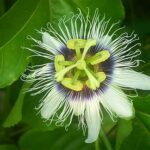
Passion Fruit
Traditionally used to promote relaxation and sleep support.
Passion Fruit (Passiflora edulis) is a vigorous climbing vine native to tropical South America, cultivated in purple (edulis) and yellow (flavicarpa) forms. The plant’s fruit and leaves contain flavonoids, glycosides and harmane-group alkaloids, and the pulp is noted for its polyphenol content and antioxidant potential; in traditional medicine the leaves and fruit have been used for mild anxiety, sleep support and as a general tonic.
Leaves and fruit are available as dried herb, powders, tinctures and standardized extracts, and pharmacological research has investigated anxiolytic, sedative and antioxidant activities without fully established mechanisms. Traditional dosing of dried leaf extract is often cited as 1–5 g taken several times per day; effects and tolerability vary between individuals, and product quality, dosages and concurrent medications should be considered before use.
At a Glance
Passiflora edulis, known commonly as Passion Fruit, is a tropical climbing vine cultivated in purple and yellow varieties for its edible pulp and fragrant flowers. Its fruit and leaves contain flavonoids, glycosides and harmane-group alkaloids and are noted for antioxidant properties. Uses and effects vary between individuals.
| Common name |
|
|---|---|
| Scientific name | Passiflora edulis |
| Plant family | Passifloraceae |
| Origin |
|
| Parts used | Fruit |
| Active compounds |
|
| Main benefits |
|
| Available forms |
|
Origin & History
Passion Fruit (Passiflora edulis) is native to tropical South America, with wild and cultivated populations originating in southern Brazil, northern Argentina and Paraguay. Two main cultivated forms are recognized: the purple edulis, adapted to higher, cooler elevations, and the yellow flavicarpa, more typical of lowland tropical regions; both thrive on well‑drained, organic‑rich soils and have since been adopted across the tropics and subtropics.
In South American traditional medicine the leaves and fruit were commonly used as a calming agent, taken for mild anxiety and sleep support. Across cultures the plant has also been used for a range of traditional applications — leaves brewed as infusions for sleep and nervous complaints, pulped fruit regarded as a tonic and mild stimulant, and in some regions boiled leaf preparations applied for digestive or respiratory concerns; Passiflora edulis is now cultivated worldwide for both food and herbal use.
Composition & Active Compounds
Passion Fruit is a vigorous, climbing plant with purple or yellow round fruits 4–10 cm in diameter, orange pulpy interior and many small hard seeds; leaves are glossy evergreen and flowers are white and purple. The plant’s chemistry is dominated by flavonoids, glycosides and harmane-group alkaloids, found across leaves and fruit and commonly measured in herbal extracts. Flavonoids are a major group of actives present throughout the plant and are a common focus of supplement formulations.
- Flavonoids: plant polyphenols including multiple subtypes.
- Flavonols (quercetin, rutin): specific flavonoid compounds reported in leaves and fruit.
- Anthocyanins (perlargonidin, delphinidin, cyanidin): pigmented flavonoids that contribute to flower and fruit coloration.
- Glycosides: sugar-bound compounds present in various plant parts.
- Alkaloids (harmanes: harmine, harmol, harmaline): nitrogen-containing alkaloids found especially in leaves.
Related Herbs
Properties & Effects
Passion Fruit has a long tradition of use for nervous system complaints and as a mild tonic, with leaves and fruit commonly employed in folk medicine for nervousness and sleep difficulties. Calming and sleep-supporting effects are the most consistently reported properties across traditional use and clinical research.
- Anxiolytic and relaxation: research and traditional use suggest it may support relief of mild anxiety and nervousness.
- Sleep support (sedative): traditionally used to aid sleep and may support sleep quality at appropriate doses.
- Antioxidant: the fruit’s polyphenol content suggests it may support antioxidant activity.
- Antiasthmatic: some studies report extracts may reduce symptoms such as wheeze, cough and breathlessness in treated patients.
- Antispasmodic and digestive support: traditionally used to relieve intestinal spasms and support digestive comfort.
Dosage & How to Use
Traditional dosing guidance centers on standardized extracts of the aerial parts; individual responses and product concentrations vary.
| Dried leaf and stem extract |
|
|---|
Safety, Side Effects & Contraindications
No contraindications or adverse effects have been reported in the provided sources to date. Individual responses can vary, and product quality, dose and formulation influence tolerability.
Because Passion Fruit extracts are traditionally used for calming and sleep support, caution is advisable when combining them with prescription sedatives, alcohol or other central nervous system depressants; speak with a healthcare professional if taking medications or managing chronic health conditions. Allergic reactions are possible with any botanical, and people who are pregnant, breastfeeding or have significant medical concerns should seek medical advice before use.
Consult a healthcare professional before use, especially if taking sedatives, other medications, or if pregnant or breastfeeding.