
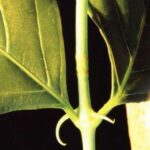
Cat’s Claw
A woody Amazonian vine traditionally used to support immune health and calm inflammation.
Cat’s Claw (Uncaria tomentosa, Uncaria guianensis) is a woody vine native to South America that has been used for centuries by Indigenous Amazonian peoples. Traditionally prepared from the bark, roots or leaves as infusions or extracts, the plant is commonly associated with immunostimulatory, anti-inflammatory and antioxidant activity and has been the subject of scientific investigation for these properties.
Phytochemical constituents include oxindole and indole alkaloids, triterpenes, sterols and polyphenols, and formulations are marketed as teas, powders and capsules. Uses and effects may vary by individual; dosing depends on species and preparation, and safety considerations (including possible interactions) mean consultation with a qualified healthcare professional is recommended before use.
At a Glance
A woody vine from the Amazon basin, Cat’s Claw has a long history of use by Indigenous South American communities and is harvested for its bark, roots and leaves. Preparations such as infusions, powders and extracts are associated with immunostimulatory, anti-inflammatory and antioxidant properties. Contemporary products include teas, capsules and powdered extracts, and effects may vary by individual and by species or formulation.
| Common name |
|
|---|---|
| Scientific name |
|
| Plant family | Rubiaceae |
| Origin | South America |
| Parts used |
|
| Active compounds |
|
| Main benefits |
|
| Available forms |
|
Origin & History
Cat’s Claw is native to the tropical forests of South America, particularly the Amazon basin and Andean foothills. The vine grows by twining around tree trunks and branches, developing hooked stipules that give the plant its common name; the most commonly used species for traditional and commercial purposes are Uncaria tomentosa and Uncaria guianensis.
Across centuries, Indigenous Amazonian peoples have harvested the bark, roots and leaves for a wide variety of traditional preparations; the plant features in the materia medica of groups such as the Asháninka. The Asháninka and other Amazonian communities historically incorporated Cat’s Claw into their pharmacopoeia for many different ailments and everyday therapeutic uses. In recent decades Cat’s Claw has attracted broader interest outside its native range, and it is now harvested both from wild populations and cultivated plants (with cultivation often requiring several years before first harvest).
Composition & Active Compounds
Cat’s Claw is a woody climbing vine with hooked stipules and a fibrous bark; stems can reach many meters as they twine around host trees. Its chemical profile is rich in multiple classes of bioactive molecules, notably oxindole and indole alkaloids, gluco-alkaloids, triterpenes, sterols and polyphenols, and the exact composition can vary by species, plant part and growing conditions. Stem and root bark, which are commonly used in supplements, are prized for their concentration of oxindole and indole alkaloids.
- Oxindole alkaloids: includes isorrincofilina, rincofilina and mitrafilina; implicated as key alkaloid constituents
- Indole alkaloids: includes dihidrocorinnateína, hirsutina and hirsuteína; part of the plant’s alkaloid fraction
- Gluco-alkaloids: includes 3,4-dehidro-5-carboxistrictosidina, carboxistrictosidina and lialósido; sugar-linked alkaloid derivatives
- Triterpenes: plant-derived triterpenoid compounds present in some species
- Sterols: plant sterols such as beta-sitosterol, estigmasterol and campesterol
- Polyphenols: includes epicatechin and procyanidins; antioxidant-type constituents

Properties & Effects
Traditionally used in South American herbal medicine, Cat’s Claw is valued for effects linked to immune support and inflammation management. Research and traditional use most consistently indicate immunostimulatory activity for Cat’s Claw.
- Immunostimulatory: research suggests it may support normal immune system activity and the body’s defenses.
- Anti-inflammatory: traditionally used to ease inflammatory-related discomfort and may support inflammatory response regulation.
- Antioxidant: may help protect cells from oxidative damage and contribute to antioxidant defenses.
Dosage & How to Use
Dosing recommendations for Cat’s Claw vary by species and formulation and specific guidance is limited.
| General recommendation | No specific recommendation is available and a healthcare professional should be consulted. |
|---|---|
| Supplement example |
|
| Administration timing | Take about 30 minutes before meals |
| Recommended duration | Short-term use only, maximum 1 month |
Safety, Side Effects & Contraindications
Certain groups should avoid Cat’s Claw and care is advised for people taking some medications. Reported contraindications include pregnancy and lactation, children, people awaiting or following organ transplantation, and individuals planning to conceive; the herb may also interact with several prescription therapies.
Serious adverse effects have not been widely reported in available sources, but individual responses can vary and mild effects (for example gastrointestinal symptoms) are possible. Precautions noted in sources include taking supplements about 30 minutes before meals and restricting use to short courses (commonly up to one month); consult a qualified healthcare professional before starting Cat’s Claw, especially if taking other medicines.
- Pregnancy and breastfeeding: advised to avoid use.
- Trying to conceive: advised to avoid use.
- Children: use is not recommended.
- Organ transplant patients: use is contraindicated.
- Drug interactions: may interact with warfarin, cancer treatments, HIV therapies, immunoglobulin-based therapies and hormone therapies; consult a clinician.
- Precautions: take ~30 minutes before meals and limit duration to short-term courses (commonly up to 1 month).
May interact with anticoagulants, cancer or HIV therapies and is not recommended during pregnancy, breastfeeding, for children or organ transplant patients; consult a healthcare professional before use.