
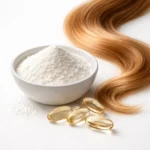
Keratin
Supports hair strength and shine, and helps improve nail resilience.
Keratin is an insoluble structural protein that constitutes roughly 95% of the hair shaft and is also present in skin, nails, and animal fibers such as wool. Wool-derived, water-soluble keratin preparations (for example, cynatine®) differ from hydrolyzed keratin used in topical cosmetics and are formulated for oral absorption.
As a dietary supplement, keratin provides constituent amino acids—notably cysteine—and has been studied at doses around 500 mg per day for effects on hair strength, shine, and nail brittleness. Uses, responses, and safety may vary by individual and depend on product formulation and duration of use.
At a Glance
Keratin is an insoluble structural protein that makes up about 95% of the hair shaft and is also found in skin, nails and animal fibers such as wool.
Wool-derived, water-soluble keratin preparations are formulated for oral absorption and differ from hydrolyzed keratin used in topical cosmetics.
| Common name | Keratin, Keratina |
|---|---|
| Origin | Sheep wool |
| Parts used |
|
| Active compounds |
|
| Main benefits |
|
| Available forms |
|
Origin & History
Keratin is a structural protein produced by keratinocytes and present across animal integuments, including human hair, skin and nails, as well as animal fibers such as wool, horns and hooves. It occurs naturally in varied habitats where wool-bearing and other keratinous animals live, and it is sourced from those animal tissues for industrial and cosmetic use.
Keratin extracted from animal horns and hooves was historically examined to understand hard tissues and was later adapted for material and cosmetic applications. Early extraction methods, including work attributed to J. Hoffmeir, enabled isolation of keratin from horns; later processes extended recovery to wool and hair. Technological advances produced different preparations, such as water-soluble keratin from sheep wool used in supplements and a range of uses in textiles, biomaterials and topical products.
Composition & Active Compounds
Keratin is a fibrous, insoluble structural protein that appears as durable strands in hair, nails and animal fibers; chemically it is a polypeptide built from 18 amino acids with a notably high cysteine content that forms stabilizing disulfide bonds. In supplement preparations, keratin is provided as a protein source or as water-soluble/hydrolyzed derivatives to deliver the constituent amino acids that support keratinized tissues.
Cysteine is the most abundant amino acid in keratin and is central to its structural strength through disulfide bond formation.
- Keratin protein: structural protein composed of amino acids, main component of hair and nails
- Cysteine: sulfur-containing amino acid, abundant in keratin and contributes to disulfide bonding
- Other amino acids: remaining amino acids that form the keratin polypeptide chain
Related Herbs

Properties & Effects
Keratin is traditionally known as the primary structural protein in hair, nails and other integuments, and it is commonly used to support the condition and resilience of these tissues. Oral keratin preparations are promoted for benefits to hair quality and nail strength.
Keratin is most widely documented for supporting hair strength, shine and elasticity.
- Strengthens hair: Keratin supplementation may support increased hair strength and reduced breakage.
- Restores shine and elasticity: Research suggests keratin may improve hair appearance by enhancing shine and elasticity.
- Supports hair growth and reduces shedding: Some studies suggest keratin supplements may help reduce hair loss and support the hair growth cycle.
- Improves nail hardness: Keratin may support harder, less brittle nails.
Dosage & How to Use
Use guidance from studies and product information centers on daily oral dosing for hair and nails.
| Hair |
|
|---|---|
| Nails |
|
Safety, Side Effects & Contraindications
Keratin supplements are derived from animal proteins and, according to the provided information, no adverse effects have been reported. Product formulations and individual tolerance vary, so responses may differ between people.
People with known allergies to wool or other animal-derived proteins, those with chronic medical conditions, or anyone taking prescription medications should consult a healthcare professional before using keratin supplements. If new or unexpected symptoms occur after starting a supplement, discontinue use and seek medical advice.
Consult a healthcare professional before using keratin supplements, especially if taking medications or managing chronic conditions.