
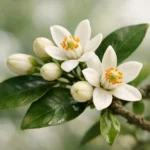
Bitter Orange Blossom
Fragrant floral extract prized for calming aroma and skin toning.
Bitter Orange Blossom (Citrus aurantium) is the fragrant white flower of the bitter orange tree, notable for yielding distinct aromatic extracts: neroli from the flowers, petitgrain bigarade from leaves and young twigs, and bitter orange peel oil from the rind. The floral hydrosol commonly known as orange blossom water or azahar is a co‑product of distillation. These preparations are widely used in perfumery, cosmetics and culinary traditions for their bright, floral scent and skin‑toning properties.
Native to Southeast Asia and long cultivated around the Mediterranean, bitter orange blossom has a history of traditional use in aroma rituals, pastry flavoring and liqueur production. Reported benefits include calming aromatic effects, skin revitalization and modest digestive support, but individual responses vary. Concentrated essential oils require dilution, the peel oil can be photosensitizing, and caution or professional advice is recommended for children, pregnant or breastfeeding people; effects are not guaranteed and may differ between individuals.
At a Glance
Fragrant white flowers and other parts of the bitter orange tree produce several aromatic products—most notably neroli essential oil and orange blossom hydrosol—used in perfumery, skincare and traditional cuisine.
Preparations from flowers, leaves, twigs and peel are prized for their calming aroma, skin‑toning properties and mild digestive support, though effects vary by individual.
| Common name |
|
|---|---|
| Scientific name | Citrus aurantium |
| Plant family | Rutaceae |
| Origin | Southeast Asia |
| Parts used |
|
| Active compounds |
|
| Main benefits |
|
| Available forms |
|
Origin & History
Originating in Southeast Asia, the bitter orange tree (Citrus aurantium) grows as a thorny evergreen adapted to warm, temperate and subtropical environments. Its highly fragrant white flowers, glossy leaves and aromatic peel are harvested for distilled essences and floral water; flowers, leaves, twigs and fruit rind are all used in traditional preparations.
The species spread westward through trade and cultivation and became well established around the Mediterranean, notably in Andalusia where it is commonly called Seville or bitter orange. The essence of bitter orange blossom was famously used by the Princess of Nerola to perfume her baths and gloves, helping to establish neroli as a prized perfume ingredient. Over time its orange blossom water entered culinary traditions, cosmetics and aromatic rituals across several cultures, while different distilled fractions (neroli, petitgrain, peel oil) found distinct uses in perfumery and skincare.
Composition & Active Compounds
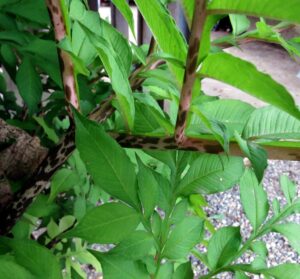
The bitter orange blossom is a small, intensely scented white flower produced by the evergreen Citrus aurantium tree; the plant also yields glossy leaves, thorny branches and a rough‑skinned orange fruit whose peel is distilled for oil. Chemical analysis of the distilled fractions shows a mix of monoterpenes and oxygenated terpenoids that define the aroma and functional properties of neroli, petitgrain and peel oils.
- Linalool: floral terpene alcohol prominent in neroli and petitgrain, contributing to the characteristic sweet‑floral scent.
- Linalyl acetate: an ester abundant in petitgrain and neroli, responsible for a fresh, fruity‑floral aroma.
- Limonene: dominant monoterpene in peel oil, gives a bright citrus note.
- Nerolidol: woody‑floral sesquiterpene present in neroli, part of the complex floral aroma.
- Farnesol: sesquiterpene alcohol found in neroli, contributing to the floral scent profile.
- Beta‑pinene: minor monoterpene with resinous‑piney facets found in the flower oil.
- Beta‑myrcene: herbaceous monoterpene detected in peel oil, adding balsamic, green notes.
Neroli essential oil distilled from the flowers, rich in linalool and linalyl acetate, is the most prized fraction for aromatic and topical applications.

Properties & Effects
Bitter orange blossom is traditionally valued for its fragrant oils and floral water, commonly used in aromatherapy, beauty routines and culinary traditions. Its distilled fractions are associated with calming aromas, skin care applications and modest digestive uses.
- Calming and antistress: May support relaxation and help reduce feelings of stress or nervous tension for some individuals.
- Sleep support: May support falling asleep and improving sleep continuity in occasional sleep disturbances.
- Skin toning and regeneration: May support skin radiance and gentle regeneration when applied topically in diluted form.
- Antimicrobial action: May have mild antibacterial or antiparasitic activity in certain preparations and uses.
- Digestive support: May support digestion and relieve minor gastric discomfort when used as a tonic.
Dosage & How to Use
Follow recommended dilution and administration methods for each preparation; essential oils and hydrosols have different typical doses and application routes.
| Essential oil — oral |
|
|---|---|
| Essential oil — diffusion |
|
| Essential oil — topical application |
|
| Hydrosol — oral | Dilute a teaspoon in a large glass of water |
| Hydrosol — external | Apply on temples, neck, or face using cotton |
Safety, Side Effects & Contraindications
Essential oils and other concentrated preparations from bitter orange blossom are potent and require careful use; the provided facts recommend medical advice before using essential oils in children, pregnant people and those who are breastfeeding. Orange blossom hydrosol (azahar) is noted in the facts as having no contraindications, but product strength and formulation vary so caution remains appropriate.
Known adverse responses recorded in the facts include possible skin irritation or allergic reactions with topical essential oil use, and the peel oil is specifically identified as photosensitizing so skin should not be exposed to sunlight after application. No specific drug interactions are listed in the provided facts; anyone taking medications or with chronic health conditions should consult a healthcare professional before using concentrated extracts or essential oils.
- Pregnancy and breastfeeding: seek medical advice before using essential oils.
- Children: medical supervision is recommended before giving essential oils to children.
- Dilution and skin testing: essential oils are highly concentrated and should be diluted; perform a patch test on the elbow to check for allergic reactions.
- Photosensitivity: essential oil from the peel can cause photosensitivity; avoid sun exposure after topical use.
- Azahar (orange blossom water): no contraindications reported for the hydrosol in the provided facts.
Consult a healthcare professional before using bitter orange essential oils, especially if pregnant, breastfeeding, a child, or taking medications; peel oil can cause photosensitivity and essential oils should be diluted and patch tested.