
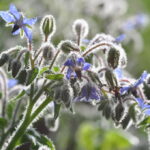
Borage
GLA-rich seed oil traditionally used for joint symptom relief and skin hydration.
Borage (Borago officinalis) is an annual herb in the Boraginaceae family, native to the western Mediterranean. The plant is recognized for edible, mucilaginous leaves and distinctive blue, five-pointed flowers, and for a cold-pressed seed oil rich in the omega-6 fatty acid gamma-linolenic acid (GLA).
Seed oil has been investigated in clinical studies for symptom reduction in rheumatoid arthritis and is also used topically to help maintain skin hydration; the aerial parts have traditional uses as mild expectorants and culinary greens. Uses and effects may vary by individual: aerial parts can contain pyrrolizidine alkaloids that are potentially hepatotoxic and are contraindicated in pregnancy, lactation, and liver disease, while high oral doses of oil may cause gastrointestinal upset. Consult a qualified healthcare professional before using borage preparations.
At a Glance
An annual herb in the Boraginaceae family, borage features hairy leaves and distinctive blue, five-pointed flowers and is cultivated for both culinary use and seed oil production.
It is valued for a cold-pressed seed oil rich in gamma-linolenic acid (GLA) and for edible, mucilaginous leaves used in salads and cooking.
The seed oil has been studied for effects on inflammatory symptoms and the aerial parts have traditional uses; uses and effects may vary by individual and aerial parts contain pyrrolizidine alkaloids that can pose safety concerns for pregnancy and liver disease.
| Common name |
|
|---|---|
| Scientific name | Borago officinalis |
| Plant family | Boraginaceae |
| Origin | Mediterranean (western) |
| Parts used |
|
| Active compounds |
|
| Main benefits |
|
| Available forms |
|
Origin & History
Borage (Borago officinalis) originates from Syria and the western Mediterranean and has naturalized across much of southern Europe as well as parts of North and South America. It typically grows in sunny locations with deep, cool, humus-rich soils and is recognizable as an annual herb with hairy stems, mucilaginous leaves and distinctive blue, star-shaped flowers.
Historically the plant has been used both culinarily and medicinally: the Greeks added fresh flowers to dishes and wines, and leaves were eaten in salads for their mild mucilaginous texture. In medieval Europe borage was commonly promoted as an aphrodisiac and included in both medicinal and culinary preparations. Over time the seed oil became sought for its fatty-acid profile while the aerial parts retained uses in traditional remedies related to mucilage and mild expectoration.
Composition & Active Compounds
Borage is an annual herb with hairy stems, broad slightly succulent leaves and bright blue, five-pointed flowers; seeds are hard achenes from which a cold-pressed oil is obtained. The seed oil is dominated by unsaturated fatty acids—gamma-linolenic acid (GLA), linoleic acid and alpha-linolenic acid—while the aerial parts contain mucilage, flavonoids, anthocyanins, allantoin and variable amounts of pyrrolizidine alkaloids. These constituents matter because essential fatty acids contribute to skin lipid composition and cellular signalling, mucilage and polyphenols relate to traditional textural and expectorant uses, and pyrrolizidine alkaloids are a noted safety concern in aerial material.
The seed oil, rich in gamma-linolenic acid (GLA), is the part most commonly used in supplements.
- Gamma-linolenic acid (GLA): primary omega-6 fatty acid in seed oil
- Linoleic acid: major unsaturated fatty acid in the oil
- Alpha-linolenic acid (ALA): omega-3 fatty acid present in smaller amounts
- Mucilage: polysaccharide-rich material in aerial parts, contributes to slippery texture
- Flavonoids: polyphenolic compounds including tannins
- Anthocyanins: pigment compounds in flowers
- Allantoin: compound in aerial parts associated with tissue-soothing topical use
- Pyrrolizidine alkaloids: variable alkaloids in aerial parts that can be hepatotoxic with prolonged use
Properties & Effects
Borage has a history of culinary and traditional medicinal use and is commonly noted for its seed oil and mucilaginous aerial parts.
Research, including clinical trials and systematic reviews, suggests borage seed oil may help reduce symptoms of rheumatoid arthritis in some people.
- Rheumatoid arthritis support: Research suggests borage seed oil may help reduce joint pain, swelling and morning stiffness in some people with rheumatoid arthritis.
- Skin hydration and dermatological comfort: May support skin hydration and help improve comfort in certain dermatological conditions, though results vary and efficacy is not conclusively established for all conditions.
- Traditional expectorant use: The aerial parts have traditionally been used as a mild expectorant for coughs and colds, with limited clinical evidence.
- Digestive transit support: The mucilaginous aerial parts have been used traditionally to help promote bowel transit.
Dosage & How to Use
Below are dosage examples recorded in clinical and traditional sources.
| Rheumatoid arthritis | 6-12 g borage seed oil per day |
|---|---|
| Cough and cold |
|
Safety, Side Effects & Contraindications
People with certain conditions should avoid borage preparations: the aerial parts can contain pyrrolizidine alkaloids that raise concerns about liver toxicity, so products containing aerial material should be used with caution or avoided by those at risk. Pregnant and breastfeeding people and anyone with known liver disease are specifically advised against using borage preparations that contain these aerial constituents.
Known side effects reported in sources include gastrointestinal complaints with high oral doses of seed oil and variable effects from the aerial parts; individual responses vary and prolonged use of aerial material carries additional safety questions. Consult a qualified healthcare professional before using borage, especially if pregnant, breastfeeding, or living with liver conditions.
- Pregnancy and lactation: contraindicated for pregnant or breastfeeding people
- Liver disorders: contraindicated for people with liver disease
- Pyrrolizidine alkaloids (aerial parts): may be hepatotoxic and carcinogenic with prolonged use
- High doses (seed oil): may cause bloating and loose stools
- Aerial parts: may cause constipation
Avoid products containing aerial parts during pregnancy, breastfeeding or if you have liver disease; high oral doses of seed oil may cause gastrointestinal upset. Consult a healthcare professional before using borage preparations.