
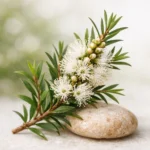
Tea Tree
An Australian shrub whose leaf-derived oil has a long history of traditional use and is a common component of aromatherapy and topical skin formulations.
Tea Tree (Melaleuca alternifolia) is an Australian shrub whose leaf-derived essential oil has a long history of traditional use and is widely used in aromatherapy and topical preparations. Scientific research reports broad-spectrum antimicrobial activity—antibacterial, antifungal and antiviral—linked to terpinen-4-ol and other terpenes, though reported effects and tolerance vary between individuals.
Common topical applications include use on acne-prone skin, fungal skin conditions and minor wounds, and the oil is also used in diffusion for ambient cleansing and tonic effects. Tea tree oil is highly concentrated and can irritate or sensitize skin; it is not recommended for pregnant or breastfeeding people, children under three years of age, or those with very sensitive skin, and internal use should only be undertaken with professional supervision. Uses and effects may vary by individual.
At a Glance
Melaleuca alternifolia yields tea tree oil, an essential oil distilled from leaves and small branches and widely used in topical products and aromatherapy. Research indicates broad-spectrum antimicrobial activity linked to terpinen-4-ol and other terpenes, though effects and tolerance vary by individual. The oil is commonly incorporated into creams, shampoos and used in diffusion but is highly concentrated and can irritate or sensitize the skin.
| Common name |
|
|---|---|
| Scientific name | Melaleuca alternifolia |
| Plant family | Myrtaceae |
| Origin | Australia |
| Parts used | Leaf (essential oil) |
| Active compounds |
|
| Main benefits |
|
| Available forms |
|
Origin & History
Native to Australia, Tea Tree (Melaleuca alternifolia) is typically found in swampy, flood-prone habitats in the country’s subtropical southeast. The shrub features papery pale bark, lanceolate evergreen leaves and small white flowers, and the leaf material is steam-distilled to produce the essential oil commonly associated with the name.
Aboriginal Australians used tea tree leaves in inhalations, infusions and compresses for a range of everyday ailments, a practice noted by early European explorers and contributing to the plant’s common name after its leaves were brewed as an improvised tea. This long-standing local use informed later commercial interest and the cultivation and harvesting of Melaleuca alternifolia for its leaf oil.
Composition & Active Compounds
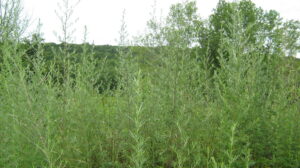
The tea tree shrub is an evergreen plant typically reaching 4–7 metres with pale, papery bark, lanceolate pointed leaves and small white flower spikes; the essential oil is obtained by steam distillation of leaves and small branches and concentrates the plant’s volatile constituents. Key chemical constituents include terpinen-4-ol, other terpene alcohols and monoterpenes such as gamma-terpinene and alpha-terpinene, plus terpenic oxides like 1,8-cineol; these compounds underlie the oil’s characteristic aroma and its reported antimicrobial and anti-inflammatory activities in laboratory studies, though individual responses vary. Terpinen-4-ol is the principal active constituent associated with the oil’s antimicrobial activity and is concentrated in the leaf-derived essential oil.
- Terpinen-4-ol: main terpene alcohol, linked to antimicrobial effects
- Gamma-terpinene: monoterpene that contributes to aroma and bioactivity
- Alpha-terpinene: monoterpene present in the oil’s profile
- 1,8-cineol: terpenic oxide (eucalyptol), influences aroma and properties

Properties & Effects
Tea tree is traditionally known for topical use against skin and mucous membrane complaints and for inclusion in aromatic preparations intended to cleanse or tone an environment. Its most well-documented property is broad-spectrum antimicrobial activity.
- Antimicrobial: Research suggests tea tree may support control of bacterial, fungal and certain viral agents in topical or local applications.
- Immunostimulant: Tea tree is traditionally used and some studies indicate it may support immune responsiveness and help strengthen defenses.
- Anti-inflammatory: Research suggests tea tree may support reduction of local inflammatory symptoms in skin and mucous membranes.
- Wound-healing: Traditionally applied to assist healing of minor wounds and skin lesions, tea tree may support tissue repair and recovery in small superficial injuries.
- Tonic: Tea tree oil is used in diffusion and some preparations as a tonic; it may support a sense of invigoration and help counter mild fatigue.
Dosage & How to Use
Dosage and administration depend on the route of use and the product form.
| Externally |
|
|---|---|
| In diffusion | Place a few drops in a device designed for diffusion. |
| Internally |
|
Safety, Side Effects & Contraindications
Some people should avoid tea tree oil or use it only under professional guidance. Use is not recommended for pregnant or breastfeeding people, children under three years of age, or individuals with very sensitive skin; the oil is highly concentrated and can cause local irritation or allergic reactions, and contact with eyes and mucous membranes should be avoided.
Known side effects include skin irritation, allergic contact dermatitis and sensitization; individual responses vary. Internal use is described in the facts but should be undertaken only under the supervision of an aromatologist or other qualified professional and not exceed one drop per day in the circumstances noted; no specific medication interactions are listed in the provided facts, so combining products or using oils alongside other treatments should be discussed with a healthcare professional.
- Pregnancy and breastfeeding: Not recommended without medical advice
- Children: Avoid use in children under 3 years
- Sensitive skin: Avoid use on very sensitive skin; perform a tolerance (patch) test on the inner elbow before broader application
- Avoid eyes and mucous membranes: Do not apply to or near eyes and mucous tissues
- Keep out of reach of children: Store securely and prevent unsupervised access
- Internal use: Only under supervision of an aromatologist or healthcare professional; do not exceed 1 drop per day as described in the facts
- Dilution and irritation risk: Essential oil is highly concentrated and should be diluted for topical use because it can be irritant and allergenic
Avoid use during pregnancy or breastfeeding, in children under three, and on very sensitive skin; tea tree oil can irritate or sensitize and internal use should only be undertaken with professional supervision—consult a healthcare professional before use.