
Turmeric
Turmeric is a long‑used Asian spice prized for its aromatic rhizome and traditional roles in cooking, dyeing and herbal remedies.
Turmeric (Curcuma longa) is a rhizomatous spice native to India and Southeast Asia, traditionally used as a culinary colorant, cosmetic and herbal remedy. The rhizome contains curcuminoids—principally curcumin—along with volatile oils, carbohydrates, proteins and micronutrients; modern research has concentrated on anti-inflammatory and antioxidant activity and on digestive and hepatoprotective effects, while recognizing that outcomes vary by individual and by formulation.
Turmeric is used as powdered rhizome, capsules, tinctures or decoctions; commonly cited daily ranges for standardized extracts are about 800–1,200 mg for anti-inflammatory aims and 1,500–3,000 mg for digestive concerns. Do not use turmeric in the presence of biliary obstruction; overall safety data are generally favorable but individual responses and potential interactions can differ, so seek professional advice before beginning supplementation.
At a Glance
Turmeric is a rhizomatous perennial in the ginger family, cultivated in India and Southeast Asia and used historically as a spice, dye and herbal remedy.
The rhizome contains curcuminoids and volatile oils and is most commonly used for anti-inflammatory and antioxidant purposes, with effects that can vary by individual and by preparation.
| Common name |
|
|---|---|
| Scientific name | Curcuma longa |
| Plant family | Zingiberaceae |
| Origin | India and Southeast Asia |
| Parts used | Rhizome |
| Active compounds |
|
| Main benefits |
|
| Available forms |
|
Origin & History
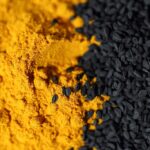
Turmeric is native to India and Southeast Asia and grows as a rhizomatous perennial in warm, tropical and subtropical climates. It is typically cultivated at moderate elevations and prefers warm temperatures, humid, well‑drained clay or fertile sediment soils and partial shade beneath trees; the harvested rhizomes are boiled, dried and milled to produce the familiar yellow‑orange powder.
Used since ancient times across South and Southeast Asia, turmeric has served as a culinary spice, natural dye, cosmetic ingredient and traditional remedy, and it spread widely through historical trade routes into the Middle East and beyond. In many Hindu traditions turmeric powder is applied during weddings and birth ceremonies as an auspicious symbol and for ritual purification. The rhizome’s multiple roles in food, ritual and commerce help explain its enduring presence in regional cultures and daily life.
Composition & Active Compounds
The turmeric rhizome is brown‑gray outside and yellow‑orange inside, with a strong aromatic odor from its essential oils; its composition includes a volatile oil fraction (monoterpenes and sesquiterpenes), a non‑volatile curcuminoid fraction and macronutrients such as carbohydrates, proteins and fats. Curcumin, a major curcuminoid, is the primary compound targeted in most turmeric supplements.
- Curcuminoids: phenolic pigment group including curcumin, demethoxycurcumin and bisdemethoxycurcumin
- Curcumin: primary curcuminoid and yellow pigment
- Demethoxycurcumin: curcuminoid related to curcumin
- Bisdemethoxycurcumin: curcuminoid variant found in the rhizome
- Volatile oils (monoterpenes and sesquiterpenes): aromatic components of the essential oil
Properties & Effects
Turmeric has a long history as a culinary spice and traditional herbal remedy, commonly used for digestive complaints, joint discomfort and as a dye or cosmetic ingredient. The most well-documented property is its anti-inflammatory activity.
- Anti-inflammatory: May support management of inflammation-related symptoms.
- Antioxidant: May support protection of cells from oxidative stress.
- Antiulcer: May support gastric mucosal protection and assist recovery from peptic ulcers in some studies.
- Hepatoprotective: May support liver health and protect hepatic function.
- Digestive support: Traditionally used to reduce intestinal gas and support digestion.
- Potential anticancer activity: Research suggests potential effects on cancer development in laboratory studies, but evidence in humans is still under investigation.
Dosage & How to Use
Typical dosage ranges cited in sources are shown below.
| Anti-inflammatory |
|
|---|---|
| Digestive problems |
|
Safety, Side Effects & Contraindications
Turmeric should be avoided in people with obstruction of the bile ducts; do not take turmeric if a biliary obstruction is present. Individuals with specific health conditions or who are taking prescription medications should consult a healthcare professional before beginning supplementation.
Overall safety data in the provided facts are generally favorable and no toxicity or interactions have been observed to date, but individual responses can vary and some people may experience adverse effects or interactions not captured in the available information. When in doubt, seek personalized medical advice rather than relying solely on general guidance.
- Biliary obstruction: Do not take turmeric in the case of bile duct obstruction.
Do not use turmeric if you have a bile duct obstruction; consult a healthcare professional before use, especially if you are taking medications or have underlying health conditions.