
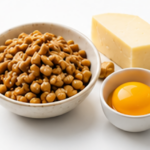
Vitamin K2
Supports bone mineralization and healthy calcium distribution.
Vitamin K2, a group of menaquinones, is a fat-soluble vitamin produced endogenously by certain gut bacteria and obtained from animal and fermented foods. Members of the K2 family (designated MK-n) act as cofactors for γ-glutamyl carboxylase, a biochemical process that enables calcium-binding proteins such as osteocalcin and several clotting factors to assume their active forms.
Because of these biochemical roles, vitamin K2 is frequently discussed in relation to bone mineralization, modulation of soft-tissue calcification and normal blood coagulation, and it interacts functionally with vitamin D and calcium metabolism. Dietary sources, supplement formats (capsules or drops) and recommended intakes vary, effects may differ between individuals, and people taking anticoagulant medications should not use supplements without medical advice.
At a Glance
Vitamin K2 comprises a family of fat-soluble menaquinones produced by intestinal bacteria and obtained from animal and fermented foods. It acts as a cofactor for γ-glutamyl carboxylase, enabling activation of calcium-binding proteins such as osteocalcin and several clotting factors. It is commonly discussed in relation to bone mineralization, regulation of calcium deposition in soft tissues and normal blood coagulation, and effects and needs vary among individuals and may interact with vitamin D or anticoagulant medications.
| Common name |
|
|---|---|
| Scientific name | Menaquinone |
| Classification | Fat-soluble vitamin, carboxyl-group transfer coenzyme |
| Origin |
|
| Active compounds |
|
| Main benefits |
|
| Available forms |
|
Origin & History
Vitamin K2 is primarily produced endogenously by certain intestinal bacteria and is also obtained from animal tissues and fermented foods; it belongs to the menaquinone family, characterized by a naphthoquinone core with variable isoprenyl side chains. Traditional dietary sources include liver, egg yolk, fatty fish and a range of fermented products, while gut microbial synthesis in the colon provides an important endogenous contribution.
Early research in 1929 identified a dietary factor that prevented hemorrhagic disorders in chicks—leading to the name “vitamin K” from the German word for coagulation—and highlighted seeds such as hemp as a source of the active substance. Over time, various cultures have relied on K2-rich foods: fermented soy (natto) in Japan and aged cheeses in parts of Europe are long-standing dietary contributors, and the vitamin’s combined microbial and food origins have influenced both traditional cuisine and nutritional interest.
Composition & Active Compounds
Vitamin K2 is a fat-soluble group of compounds based on a naphthoquinone core; it appears chemically as derivatives of this naftoquinone nucleus extended by variable prenyl (isoprenyl) side chains. The main chemical constituents are the menaquinones (designated MK-n), which differ in the length of their isoprenyl residues and determine the specific members of the K2 family.
The menaquinones (MK-n) are the primary active compounds in vitamin K2 and differ by the number of isoprene units in their side chains.
- Menaquinones (MK-n): family of K2 compounds distinguished by chain length, e.g., MK-5, MK-7
- Naphthoquinone nucleus: core chemical scaffold shared by all vitamin K forms
- Prenyl residues (isoprenyl side chains): variable isoprenyl groups that define each menaquinone’s chain length
Related Herbs

Properties & Effects
Vitamin K2 is traditionally known for roles in supporting bone health, managing the distribution of calcium in the body, and contributing to normal blood clotting. It is discussed in nutritional and clinical contexts for these functions, though individual responses and needs can vary.
Bone mineralization is among the most well-documented properties associated with vitamin K2.
- Bone mineralization: research suggests it may support healthy bone density and normal mineral deposition in bone.
- Calcium regulation: it may support appropriate calcium distribution and help limit calcium buildup in soft tissues.
- Blood coagulation: it may support normal blood clotting processes.
- Anti-inflammatory: research suggests it may help modulate inflammatory responses.
- Vitamin D activation: it may support the activation or functional cooperation of vitamin D in the body.
Dosage & How to Use
Recommended dietary amounts depend on age and sex.
| Children (1–18 years) | 30–75 µg |
|---|---|
| Adult women | 90 µg |
| Adult men | Up to 120 µg |
Safety, Side Effects & Contraindications
People taking anticoagulant medications that act as antivitamin K should avoid vitamin K2 supplements without medical supervision, since these drugs interfere with vitamin K activity; dietary changes may be advised by a clinician. Individuals with known hypersensitivity to the active ingredient should not use supplements, and pregnant or breastfeeding women are advised to limit intake to the recommended dietary amounts as a precaution. Certain conditions such as chronic intestinal disease or liver cirrhosis can affect vitamin K status and may warrant medical oversight.
There are no major adverse effects reported in the available data, and no specific side effects are known to date even at high supplemental doses over short-to-moderate periods; however, individual responses vary and anyone with health conditions or on medication should consult a healthcare professional before starting supplements. Vitamin K deficiency has been associated with easy bruising, nosebleeds, dark stools, heavy menstrual bleeding and reduced bone mineralization in reported contexts, which underscores the importance of clinical guidance in people with risk factors for low vitamin K.
- Anticoagulant therapy: Patients using antivitamin-K medications should avoid supplements and consult a clinician.
- Pregnancy and breastfeeding: Limit intake to recommended dietary amounts as a precaution.
- Hypersensitivity: Avoid use in individuals allergic to the active compound.
Consult a healthcare professional before using Vitamin K2 supplements, especially if taking anticoagulant medications or during pregnancy or breastfeeding.