
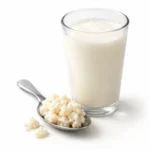
Kefir
A fermented probiotic beverage traditionally used to support healthy gut flora.
Kefir is a fermented beverage produced by inoculating milk or sugar water with kefir grains: a symbiotic matrix of bacteria, yeasts and polysaccharides. Two main types are produced and consumed worldwide: milk kefir (made with dairy) and water kefir (made with sugar water, fruit juice or coconut water).
- Common forms: milk kefir, water kefir, commercially pasteurized kefir drinks, and powdered or freeze-dried starter cultures.
Traditional preparation involves combining kefir grains with the chosen liquid, allowing fermentation at ambient temperature until the desired acidity and flavor develop, then straining out the grains for reuse. Fermentation conditions (time, temperature, and substrate) influence flavor, texture and the microbial profile.
- Typical constituents: diverse lactic acid bacteria, acetic acid bacteria, various yeasts, and extracellular polysaccharides (e.g., kefiran); milk kefir also contains proteins, fats and some B vitamins derived from the milk.
Uses: Kefir is primarily consumed as a beverage or used in sauces, dressings and desserts. It is valued gastronomically for its tangy flavor and effervescence. Some people seek kefir as part of a fermented-food approach to diet; individual responses vary and effects are not guaranteed.
- Reported or observed effects (vary by individual): contributes to dietary variety, can alter taste and texture of recipes when used as an ingredient, and provides a source of live cultures in unpasteurized preparations.
Safety and practical considerations: milk kefir contains dairy—choose water kefir or non-dairy alternatives if avoiding lactose or milk proteins. Homemade fermentation requires clean equipment and careful handling to reduce contamination risk. Store finished kefir refrigerated and monitor for off-smells, unusual colors or visible mold; discard if signs of spoilage appear. People with severe immune suppression, serious illness, or specific medical concerns should seek personalized advice before consuming products containing live cultures.
Ingredients, strain composition and effects can differ between home- and commercially produced kefir. Uses and effects may vary by individual.
Kefir
Kefir is a traditional fermented beverage from the Caucasus, made by inoculating milk or sugar water with kefir grains — a symbiotic matrix of bacteria, yeasts and polysaccharides. Available as milk kefir or water kefir, the drink is mildly effervescent and tangy and contains live microbial cultures commonly referred to as probiotics.
Consumed to introduce live cultures into the diet, kefir is associated with supporting intestinal flora balance and digestive comfort, though individual responses vary and effects are not guaranteed. Milk kefir contains dairy and lactose; water kefir or non-dairy preparations are alternatives, and people with specific health concerns should seek personalized advice before using products containing live cultures.
At a Glance
Originating in the Caucasus, kefir is produced by fermenting milk or sugar water with kefir grains — small white, gel-like clusters of bacteria, yeasts and polysaccharides.
It contains live microbial cultures commonly called probiotics and is consumed to introduce these cultures into the diet, though individual responses vary and effects are not guaranteed.
| Common name |
|
|---|---|
| Origin | Caucasus |
| Parts used | Probiotics |
| Active compounds |
|
| Main benefits |
|
| Available forms |
|
Related Herbs


Origin & History
Kefir originated in the Caucasus, a mountainous and semi‑arid region stretching from the Black Sea to the Caspian Sea. The beverage was discovered accidentally by nomads carrying milk in skin bags, where native bacteria and yeasts formed the gelatinous kefir grains that ferment milk into a slightly effervescent, creamy drink.
It was prized by Caucasian nomads and local communities as a staple fermented drink believed to support vitality and resistance to external aggressions. Over time kefir became a traditional food across Eastern Europe and Russia and later reached Western Europe; traditional grain‑fermentation methods remain in use alongside bottled products and dietary supplements derived from kefir cultures.
Composition & Active Compounds
Kefir is a creamy, slightly effervescent white fermented milk beverage produced by kefir grains; its chemical makeup includes live probiotic microorganisms, polysaccharides such as kefiran, organic acids (lactic and acetic), antimicrobial substances (bacteriocins and hydrogen peroxide), plus milk proteins and B vitamins. The benefits of kefir are essentially linked to the probiotics present in kefir grains, which are the primary component used in supplements.
- Probiotic microorganisms: mixed lactic acid bacteria and yeasts found in kefir grains
- Kefiran: extracellular polysaccharide produced by the grains
- Lactic acid: organic acid formed during fermentation
- Acetic acid: organic acid formed during fermentation
- Bacteriocins: antimicrobial peptides produced by certain lactic bacteria
- Hydrogen peroxide: antimicrobial compound produced by some microbes
- Proteins: milk proteins present in milk-based kefir
- B vitamins: B-group vitamins contributed by the milk and microbial activity
Properties & Effects
Kefir is traditionally known as a fermented beverage consumed for its live cultures and for supporting digestive well‑being in regional diets. It has a long history of use where fermented foods are part of everyday nourishment.
The most well‑documented property of kefir is its potential to help maintain or restore a balanced intestinal flora.
- Intestinal flora balance: May support maintaining or restoring a balanced intestinal microbial community.
- Digestive comfort: May support digestive comfort and reduce the occurrence or severity of diarrhea in some individuals.
- Immune support: May support the body’s defenses by contributing to normal immune function.
- Antimicrobial action: Research suggests it may exhibit antimicrobial activity against certain microbes.
- Lipid profile effects: Some studies suggest it may help lower blood triglyceride levels and raise HDL cholesterol, but evidence is preliminary.
Not recommended for people with milk allergy or lactose intolerance, pregnant or breastfeeding women, young children, or anyone with immunodeficiency; consult a healthcare professional before use.
Dosage & How to Use
Guidance on kefir dosing varies and specific quantities are not established.
No specific dosing recommendations are available; many studies describe regular courses of kefir‑derived probiotics, and commercial supplements differ in formulation and potency — follow the manufacturer’s instructions and consult a health professional if in doubt.
Safety, Side Effects & Contraindications
Caution is advised for specific groups: milk kefir contains dairy and may not be suitable for people with milk protein allergy or lactose intolerance. The provided facts advise against use in pregnant or breastfeeding women, in children, and in people with immunodeficiency; anyone with a serious health condition should seek personalized medical advice before consuming products that contain live microbial cultures.
Reported undesirable effects are generally mild and transient and may increase with high intake; these include constipation, bloating and flatulence. Homemade kefir requires careful hygiene to reduce contamination risk, and finished products should be refrigerated and discarded if they show signs of spoilage. Uses and effects may vary by individual.
- Allergy or lactose intolerance: Not recommended for people allergic to milk proteins or intolerant to lactose.
- Pregnancy and breastfeeding: Use is not recommended during pregnancy or lactation according to the provided facts.
- Children: Not recommended for children per the provided guidance.
- Immunodeficiency: Not recommended for people with weakened immune systems.