
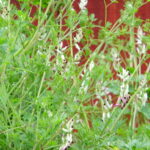
Fumitory
A traditional depurative herb used to support liver and digestive wellness.
Fumitory (Fumaria officinalis) is a small perennial herb whose flowering aerial parts are used in traditional herbal practice. Historically called “hierba de la ictericia,” it has been employed as a depurative and diuretic and is commonly associated with choleretic and cholagogue actions related to digestive and biliary support.
The plant contains isoquinoline alkaloids—chiefly protopine—flavonoid heterosides such as rutoside, potassium and organic acids. Research has investigated hepatoprotective, spasmolytic, antiemetic and antioxidant activities, and topical preparations have been studied for eczema and psoriasis; uses and effects may vary by individual and are not guaranteed. Common formats include dry extracts in capsules or tablets and herbal infusions. Reported contraindications include kidney stones, obstructive biliary calculi, hepatitis and hypertension; overdose has been associated with diarrhea or respiratory difficulty.
At a Glance
Fumitory is a small perennial herb used traditionally for liver, biliary and digestive support and is harvested for its flowering aerial parts.
It is used as a depurative and choleretic and is commonly supplied as dry extracts in capsules, tablets and as an infusion.
| Common name |
|
|---|---|
| Scientific name | Fumaria officinalis |
| Plant family | Fumariaceae |
| Origin | Temperate regions of the Northern Hemisphere, Europe and Asia |
| Parts used | Flowering aerial parts |
| Active compounds |
|
| Main benefits |
|
| Available forms |
|
Origin & History
Fumitory (Fumaria officinalis) is native to temperate regions of the Northern Hemisphere and is common across Europe and Asia. It grows in a wide range of soils from lowland plains to upland sites up to about 1,700 metres, often appearing in disturbed ground such as ruins or waste areas; the plant flowers from May to October and is typically harvested around June when foliage is abundant.
Its Latin name—fumus terrae, “smoke of the earth”—reflects the greyish foliage and the pungent sap that historically led to its popular name and uses. References to fumitory date back to classical sources: Galen recommended it for liver complaints, and by the late 19th century it was cited in European materia medica for circulatory and skin-related concerns. Across traditions it has been used as a depurative and for digestive and biliary support, and preparations have included infusions, topical extracts and dry plant extracts; uses and effects vary between cultures and individuals.
Composition & Active Compounds
Fumitory is a small perennial herb about 30 cm tall with thin, angular stems, grey-green pinnate leaves and tubular flowers that range from white to pink or violet. The flowering aerial parts are rich in isoquinoline alkaloids (notably protopine), flavonoid heterosides such as rutoside, mineral salts like potassium and several organic acids including fumaric, malic and citric acids.
Protopine, the principal isoquinoline alkaloid concentrated in the flowering aerial parts, is regarded as the most important active compound.
- Protopine: major isoquinoline alkaloid present in fumitory, central to many reported activities
- Isoquinoline alkaloids: a group of alkaloids in the plant (including protopine, sinactine, cryptopine) that affect smooth muscle and other targets
- Rutoside: a flavonoid heteroside with antioxidant properties
- Potassium: a mineral salt found in the aerial parts
- Fumaric acid: organic acid present in the plant, noted in topical use for some skin conditions
- Malic acid: common plant organic acid
- Citric acid: organic acid present in the aerial parts

Properties & Effects
Fumitory has traditionally been used for liver, biliary and digestive support and is commonly employed as a depurative and diuretic; herbal preparations use the flowering aerial parts. Uses and effects vary by individual and available research is cautious and context-specific.
Research suggests fumitory may have hepatoprotective effects and could support liver health in some contexts.
- Depurative: traditionally used to support the body’s cleansing processes.
- Diuretic: may support mild increases in urine output.
- Hepatoprotective: research suggests it may support liver health and detoxification in some studies.
- Antispasmodic: may help relieve intestinal and biliary spasms and related discomfort.
- Choleretic / Cholagogue: may support bile production and flow to aid digestion.
- Antiemetic: research suggests it may reduce nausea in some cases.
- Antioxidant: may provide antioxidant activity according to laboratory studies.
- Dermatological adjunct: has been used topically or orally as an adjunct in studies to help reduce symptoms of eczema and psoriasis.
Dosage & How to Use
Follow product-specific instructions and consult a healthcare professional when needed; reported dosages from traditional use and supplements are as follows.
| Alone |
|
|---|---|
| In combination with other plant extracts |
|
Safety, Side Effects & Contraindications
People with kidney stones, obstructive biliary stones, active hepatitis or high blood pressure are generally advised to avoid fumitory supplements. Reported adverse effects with overdose include diarrhea and respiratory difficulty; individual responses may vary.
If taking medicines that affect liver function, bile flow or blood pressure, or if there are underlying hepatic, biliary or renal conditions, consult a healthcare professional before use. Follow product directions and seek medical advice when combining fumitory with other treatments.
- Kidney stones: avoid use if kidney calculi are present.
- Obstructive biliary stones: avoid use if gallstones that may block bile ducts are present.
- Hepatitis: avoid use during active hepatitis or significant liver inflammation.
- Hypertension: avoid use if affected by high blood pressure.
Avoid fumitory if you have kidney stones, obstructive gallstones, active hepatitis or high blood pressure; consult a healthcare professional before use, especially if taking medications or managing liver, biliary or cardiovascular conditions.