
Lemon Eucalyptus
A lemon-scented essential oil used as a plant-based insect repellent.
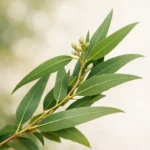
Lemon Eucalyptus (Corymbia citriodora) is a tall, white-barked tree native to Australia, valued for leaves that emit a lemon-like scent when crushed. Its essential oil is rich in citronelal and related terpenoids including citriodiol, and has been used in aromatherapy and topical products; scientific research has explored its insect-repellent, anti-inflammatory and analgesic effects without guaranteeing outcomes.
Available as distilled essential oil, topical blends and oral preparations in some markets, lemon eucalyptus is commonly applied for insect-repellent purposes and for topical relief in massage or skin care routines, though individual responses vary. Essential oils should be diluted for skin use, avoided in young children and generally contraindicated during pregnancy and breastfeeding without professional guidance; performing a patch test is recommended to check for sensitivity.
At a Glance
Lemon Eucalyptus is a tall, white-barked tree in the Corymbia genus whose leaves release a lemon-like aroma when crushed and yield a distilled oil rich in terpenoids. It is commonly applied for insect-repellent purposes and topical relief because of constituents such as citronelal and citriodiol, though individual responses vary.
Extracts are used in aromatherapy and topical formulations; traditional uses include topical wound care and relief of inflammatory conditions. Safety considerations include dilution for skin use and avoiding use in young children and during pregnancy or breastfeeding unless advised by a professional.
| Common name |
|
|---|---|
| Scientific name | Corymbia citriodora |
| Plant family | Myrtaceae |
| Origin |
|
| Parts used | Leaves |
| Active compounds |
|
| Main benefits |
|
| Available forms |
|
Origin & History
Lemon Eucalyptus (Corymbia citriodora) is native to Australia and grows as a tall, white-barked tree in subtropical to tropical habitats; it is also cultivated and naturalised in parts of Africa, Madagascar, South America, China and Vietnam and is found in mild Mediterranean coastal areas where frost is uncommon. The species prefers well-drained soils and is noted for rapid growth and a root system that can help lower water tables in swampy ground.
Aboriginal peoples traditionally used the tree’s sap, known locally as “goma,” as a topical disinfectant for wound care and to support healing. In other traditions the leaves and distilled oils have been applied topically for a range of inflammatory and musculoskeletal complaints and used in aromatherapy; such historical uses reflect cultural knowledge but do not guarantee consistent effects across individuals.
Composition & Active Compounds
Lemon Eucalyptus is a tall tree with smooth, pale bark that peels in plates and narrow pointed green leaves which release a characteristic lemon-like aroma when crushed. The plant’s leaves are the primary source of a distilled essential oil rich in terpenoids; the main chemical constituents include citronelal, citronelol, isopulegol, neoisopulegol and citriodiol, compounds that underlie the aroma and are associated with insect-repellent and topical effects in research.
The leaves and their distilled essential oil, particularly the citriodiol- and citronelal-rich fraction, are the parts most commonly used in supplements and topical products.
- Citronelal: a monoterpenoid aldehyde responsible for the lemon-like scent and linked to repellent activity
- Citronelol: a monoterpenoid alcohol contributing floral-citrus aroma and topical effects
- Isopulegol: a monoterpene alcohol present in the oil, studied for calming and mild analgesic properties
- Neoisopulegol: an isomer related to isopulegol found in the essential oil
- Citriodiol (p-menthane-3,8-diol): an oxygenated monoterpene noted for insect-repellent activity
Related Herbs
Properties & Effects
Lemon Eucalyptus is traditionally known for use in insect protection and as a topical agent for inflammatory or musculoskeletal complaints. Research suggests its insect-repellent activity is the most well-documented use.
- Insect-repellent: may help repel mosquitoes, ticks and other biting insects when applied topically or used in formulations.
- Anti-inflammatory: may support reduction of local inflammation when applied to affected skin or joints.
- Analgesic: may support temporary relief of localized pain such as muscle aches or discomfort from insect bites.
- Soothing: may support calming of skin irritation and itching after minor bites or topical irritation.
Dosage & How to Use
Suggested topical and diffusion uses with recommended amounts and frequencies are listed below.
| Repel insects (external use) |
|
|---|---|
| Diffusion |
|
| Calm insect bite |
|
| Relieve inflammatory muscle or joint pain |
|
Safety, Side Effects & Contraindications
People should generally avoid topical or aromatic use of Lemon Eucalyptus oil in children under six years and during pregnancy or breastfeeding unless a qualified healthcare professional advises otherwise. Caution is advised for individuals with respiratory conditions or seizure disorders, since inhaled or topical essential oils can cause adverse reactions in susceptible people.
Side effects are uncommon but can include local skin irritation or allergic responses; a patch test is recommended before wider application. The provided facts do not list specific medication interactions, so consult a healthcare professional if taking prescription drugs or managing chronic conditions.
- Children: avoid use in children under six years
- Pregnancy and breastfeeding: avoid use during pregnancy and lactation unless advised by a healthcare professional
- Asthma: use with caution; inhaled oils may worsen respiratory symptoms in sensitive individuals
- Epilepsy: use with caution; essential oils may pose risks for people with seizure disorders
- Allergy/sensitivity: perform a patch test on the inner elbow to check for skin reactions
Avoid use in children under six and during pregnancy or breastfeeding without medical advice; people with asthma, epilepsy, or skin sensitivity should consult a healthcare professional before use.