
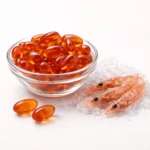
Krill
Marine oil rich in omega‑3s and astaxanthin prized for antioxidant and anti‑inflammatory support.
Krill are small marine crustaceans—notably Euphausia superba and Meganyctiphanes norvegica—found in Arctic, Antarctic and Atlantic waters and forming a key element of the marine food web. Krill oil, commonly marketed in capsule form, is rich in omega‑3 fatty acids (EPA and DHA) and the carotenoid astaxanthin, and has been studied for antioxidant and anti‑inflammatory properties.
Research has explored potential cardiovascular, anti‑inflammatory and neuroprotective effects related to krill’s phospholipid‑bound omega‑3s and astaxanthin, but evidence varies and effects may differ by individual. Dosing is typically adjusted to the oil’s omega‑3 content, and krill oil may be unsuitable for those with seafood allergy, people taking anticoagulants, and individuals preparing for surgery; pregnant or lactating people should consult a healthcare professional.
At a Glance
Krill are small, shrimp-like marine crustaceans harvested in polar and temperate oceans and used as a source of nutrient-rich oil. Certain species, notably Antarctic krill and Atlantic krill, are valued for oil that contains phospholipid-bound omega‑3s and the carotenoid astaxanthin.
Krill oil is commonly sold in capsule form and is researched for antioxidant, anti-inflammatory and cardioprotective effects, but responses vary by individual.
| Common name |
|
|---|---|
| Scientific name |
|
| Classification | Euphausiacea |
| Origin |
|
| Parts used | Krill oil |
| Active compounds |
|
| Main benefits |
|
| Available forms |
|
Origin & History
Krill are small, shrimp-like crustaceans of the family Euphausiacea that inhabit polar and temperate oceans, with more than eighty species recorded across Arctic, Antarctic and Atlantic waters. Some species, such as Euphausia superba, favor cold polar seas while others like Meganyctiphanes norvegica occupy temperate zones; together they form a central component of the marine food web, sustaining whales, seals, penguins, seabirds and many large fish.
The word “krill” comes from Norwegian whalers and reflects the long‑standing recognition of these organisms as a foundational food source for large marine animals. Commercial interest in krill accelerated in the late twentieth century as harvesting and processing technologies improved, and supplies have since supported uses from animal feed to human dietary supplements such as krill oil; fisheries management measures have been introduced in many regions to reduce the risk of overexploitation.
Composition & Active Compounds
Krill are small, shrimp-like crustaceans with antennae, prominent black eyes and a segmented carapace; size and color vary by species. Chemically, krill tissue and krill oil are rich in long-chain omega‑3 fatty acids (EPA and DHA), the carotenoid astaxanthin and phospholipids, and they also contain vitamins and trace minerals; these constituents are of interest because omega‑3s and phospholipids relate to cell membrane composition and nutrient delivery, while astaxanthin contributes antioxidant activity. Krill oil used in supplements is prized mainly for its phospholipid-bound omega‑3s (EPA and DHA) and the antioxidant astaxanthin.
- Omega 3 (EPA and DHA): long-chain polyunsaturated fatty acids present in krill oil and commonly quantified to indicate supplement content.
- Astaxanthin: a red marine carotenoid with antioxidant properties present in krill oil.
- Phospholipids: lipids that bind omega‑3s in krill and influence the oil’s structure and absorption characteristics.
Related Herbs


Properties & Effects
Krill is used as a marine source of nutrient-rich oil and is traditionally taken to support general wellness, particularly areas related to circulation and inflammation. Clinical research has most consistently examined krill oil for its potential cardiovascular benefits.
- Cardioprotective: Research suggests it may support heart health and help reduce elevated cholesterol and blood lipid levels.
- Anti-inflammatory: Studies suggest it may support reduction of inflammation and relieve inflammatory joint discomfort in some people.
- Antioxidant: It may help protect cells from oxidative damage and support the body’s antioxidant defenses.
- Potential neuroprotective: Research suggests it may support cognitive function and could help counter age-related decline in some individuals.
Dosage & How to Use
No specific dosing recommendations exist for krill oil, so intake is typically adjusted based on the product’s omega 3 content and individual needs.
| EPA and DHA intake |
|
|---|
Safety, Side Effects & Contraindications
Certain people should avoid or use caution with krill oil based on its origin and effects; this includes individuals with seafood allergies, people taking blood‑thinning medications, those preparing for surgery, and children. Pregnant and lactating people may take krill oil only under the supervision of a healthcare professional.
Reported side effects are generally uncommon and mild, most often a temporary fishy odor in the urine and occasional transient nausea. Krill oil can affect bleeding risk and therefore may interact with anticoagulant or antiplatelet medications; consult a healthcare professional before use if taking such treatments.
- Allergy to shellfish: avoid krill oil due to risk of allergic reaction.
- Anticoagulant therapy: may increase bleeding risk and interact with blood‑thinning medications.
- Preparing for surgery: discontinue or avoid unless advised by a clinician because of bleeding risk.
- Children: not recommended for use in children.
May cause reactions in people with seafood allergy and can interact with anticoagulant medications or increase bleeding risk; consult a healthcare professional before use, especially if pregnant, breastfeeding, taking blood thinners, or preparing for surgery.